



What is CBDP? A Scientific Exploration of this Rare Cannabinoid
What is CBDP?
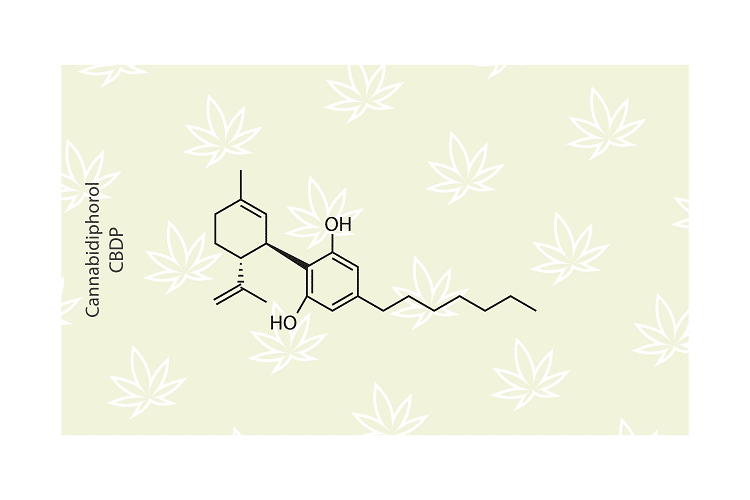
CBDP, or cannabidiphenol, is a rare phytocannabinoid discovered in the cannabis plant. It is the heptyl homolog of cannabidiol (CBD). Before 2019, it was not recognized as a natural cannabinoid and was considered a synthetic compound. This molecule is also known as CBD-C7 and CBD-heptyl.
In 2019, Italian researchers, responsible for the discovery of THCP, identified CBDP as a natural phytocannabinoid and isolated it from the cannabis plant. This identification was achieved using advanced techniques such as high-performance liquid chromatography (HPLC) and high-resolution mass spectrometry (HRMS).
The molecular formula of CBDP is C23H34O2. Unlike CBD, which has a 5-carbon alkyl side chain, CBDP has a 7-carbon side chain.
CBDP Production
CBDP, being naturally present in hemp, is not considered a synthetic substance. However, direct extraction from the plant is insufficient to meet the needs of commercial production. Therefore, CBDP is produced in the laboratory by isomerization fromCBD isolate, which is cannabidiol in its crystalline form. Due to this production method, it is classified as a semi-synthetic compound, similar to HHC or H4CBD.
Effects of CBDP
Current knowledge about CBDP is still limited, and further research is needed to fully understand its mechanisms of action and therapeutic potential.
A 2018 study suggested that the length of the side chain in cannabinoid compounds could alter the affinity and pharmacology of cannabinoid receptors. Some scientists believe that the altered structure of CBDP allows it to bind more effectively to CB2 receptors compared to CBD.
However, a 2019 study published in the journal "Scientific Reports" indicates that CBDP has a low affinity for CB1 and CB2 receptors. Therefore, it is unlikely that a longer side chain would help CBDP bind more effectively to receptors in the human body.
Researchers continue to explore the potential anti-inflammatory, antioxidant, and anti-epileptic activities of CBDP, although this is not yet a priority. In 2021, an Italian study examined CBDP's potential against breast cancer, suggesting that this cannabinoid could have similar but more potent effects than CBD. These preliminary results indicate that CBDP could help fight breast cancer cells in cell culture and potentially improve the effectiveness of some existing cancer drugs.
Side Effects of CBDP
As with any new compound, a comprehensive safety profile is needed to assess its potency, therapeutic potential, safety, and appropriate routes of consumption.
Potential side effects of CBDP may include fatigue, drowsiness, dry mouth, or changes in appetite. These side effects are usually mild and disappear after a short time. The intensity of the effects may vary depending on age, body proportions, individual sensitivity, dosage, and method of consumption.
CBDP Legislation
Legislation concerning cannabinoids is heavily influenced by local regulations on cannabis derivatives. In 2018, the US Farm Bill legalized all cannabis derivatives containing up to 0.3% THC on a dry weight basis. In France, the legal limit is 0.3% THC.
The Farm Bill defines CBDP as legal in the United States, but laws regarding cannabinoids can vary from jurisdiction to jurisdiction. Some countries and states may have stricter rules regarding the sale and use of these products, while others may have no regulations at all. Therefore, it is crucial to check local laws before importing or using products containing CBDP.
Currently, CBDP is permitted in most European countries, including France, but it is not permitted in Norway.
Conclusion: The Importance of Laboratory Analysis
CBDP is a natural phytocannabinoid discovered in the cannabis plant, with a unique chemical structure that distinguishes it from CBD. Although research on this cannabinoid is still limited, early studies suggest it may have promising therapeutic effects, particularly against breast cancer.
As with all cannabinoids, ensuring the safety and quality of CBDP products is essential. This includes independent laboratory testing to verify the absence of contaminants such as pesticides, heavy metals, and solvents, as well as to confirm the cannabinoid content of the products.
CBDP could offer an interesting alternative to other cannabinoids, particularly for those seeking potentially more potent effects than CBD. However, further research is needed to fully understand its effects and therapeutic potential.