THCA

Buy THCA: discover our premium THCA selection

Power :⚡⚡

Looking to buy THCA in France and searching for premium products selected for their quality, concentration, and aromatic profile? Discover the THCA Lord Of CBD, designed for cannabinoid enthusiasts seeking new options and carefully chosen genetics.

Our range brings together premium THCA products selected according to several essential criteria: overall quality, cannabinoid profile, aromatic richness, traceability, and available analyses. Whether you're looking for a THCA flower, a particularly cannabinoid-rich strain, or simply a new variety to discover, you can easily compare our products and choose the one that best meets your needs.

THCA (tetrahydrocannabinolic acid) is a cannabinoid naturally present in cannabis and is the precursor to Δ9-THC. This characteristic clearly distinguishes it from traditional CBD: under the influence of heat, THCA can undergo decarboxylation and transform into THC. Products rich in THCA are therefore intended exclusively for an adult and informed public.

At Lord Of CBD , we place particular importance on transparency. Composition, concentration, and essential information are made available to you so that you can make an informed decision when purchasing THCA online

Browse our THCA shop now and discover our various products available online. Enjoy fast and discreet delivery in France and Europe, with free shipping on orders over €39.

Looking to buy THCA online? Discover our THCA selection and choose your next product from those available at Lord Of CBD.
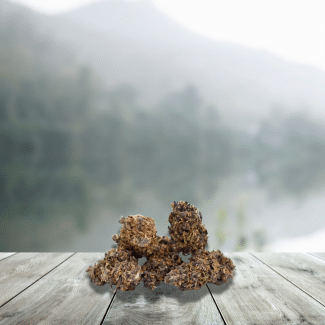
4 Products

THCA: What is tetrahydrocannabinolic acid? A complete buyer's guide

THCA: the cannabinoid precursor to THC

THCA , or tetrahydrocannabinolic acid , is a cannabinoid naturally present in the cannabis and hemp plants. While relatively unknown to the general public a few years ago, it is now generating increasing interest among consumers who want to better understand the natural composition of cannabis and the differences between the many molecules produced by the plant.

Contrary to what its name might suggest, THCA and THC are not exactly the same molecule.

THCA is the acidic precursor form of Δ9-THC (delta-9-tetrahydrocannabinol). In fresh or unheated plants, a significant portion of the cannabinoid potential associated with THC is naturally found in this acidic form.

The difference becomes particularly significant when THCA is subjected to heat. Under the effect of a chemical phenomenon called decarboxylation, THCA loses part of its molecular structure and gradually transforms into Δ9-THC.

It is precisely this transformation that explains why plant material rich in THCA can present a very different profile before and after heating.

THCA should therefore not be confused with CBD, nor with already decarboxylated THC, nor with the numerous neo-cannabinoids that have appeared in recent years.

To truly understand THCA, its potential effects, its origin and its status in France, one must begin by observing what happens directly in the plant.

What exactly is THCA?

THCA stands for Tetrahydrocannabinolic Acid, translated into French as acide tetrahydrocannabinolice.

This is an acidic cannabinoid produced naturally by Cannabis sativa L.

The plant does not necessarily directly produce cannabinoids in the neutral forms that the general public is most familiar with.

These include various acid precursors such as:

  • CBDA aprecursor to CBD;
  • CBGA aprecursor to several cannabinoids;
  • THCA aprecursor to THC;
  • CBCA , precursor to CBC .

This natural chemistry helps to explain why the analysis of a cannabis flower can simultaneously reveal several acidic and neutral forms of cannabinoids.

In fresh plant material, THCA can represent a significant proportion of the cannabinoids linked to THC potential.

During aging, storage and especially when a sufficiently high temperature is applied, some of the THCA can gradually be transformed into THC.

This reaction has a name that is essential for understanding THCA: decarboxylation.

THCA and THC: what is the difference?

The difference between THCA and THC is probably the most important question regarding this cannabinoid.

THCA is the acidic precursor of THC.

Δ9 -THC, on the other hand, corresponds to the neutral form primarily known for the psychoactive effects of cannabis.

From a molecular perspective, THCA notably possesses an additional carboxyl group. During decarboxylation, this group is eliminated in the form of carbon dioxide.

The resulting molecule then becomes Δ9-THC.

In other words:

THCA + heat → decarboxylation → Δ9-THC

This transformation explains a large part of the particular characteristics of THCA.

Raw THCA is not equivalent to THC

In its non-decarboxylated state, THCA does not have the same psychoactive profile as Δ9-THC.

However, this does not mean that a product rich in THCA should be considered equivalent to a CBD product.

The reason is simple: THCA can be transformed into THC under the action of heat.

This characteristic is fundamental when discussing flowers, extracts, or other products rich in THCA.

What is THCA decarboxylation?

Decarboxylation is a chemical reaction in which THCA is converted into THC .

This transformation can occur gradually over time, but it is greatly accelerated by heat.

The phenomenon is particularly well known in the world of cannabis because it profoundly alters the chemical profile of the product.

When THCA is heated, its molecular structure changes.

It loses a carboxyl group, which leads to the formation of Δ9-THC.

This transformation explains why temperature is a central element when trying to understand the differences between THCA and THC.

Scientific literature confirms that THCA can decarboxylate slowly during storage and much more rapidly when exposed to high temperatures.

Why does heat change THCA so much?

Because THCA and THC do not interact with the body in exactly the same way.

Δ9-THC has significant activity at cannabinoid receptors involved in its psychoactive effects.

Non-decarboxylated THCA exhibits different behavior.

Once transformed into THC, the product's profile therefore changes considerably.

That is why it is incorrect to evaluate a product rich in THCA solely by looking at its initial Δ9-THC level without taking into account its conversion potential.

Is THCA psychoactive?

THCA in its non-decarboxylated form is generally not considered to produce the intoxicating effects characteristic of Δ9-THC.

This distinction is widely described in the scientific literature.

She explains why THCA is generating so much interest today.

However, an essential nuance must be added immediately: a product rich in THCA can become very different after decarboxylation.

When a significant amount of THCA is converted into THC, the characteristic effects of Δ9-THC then become relevant.

Therefore, it is the combination of three factors that must be taken into account:

the initial concentration of THCA + the amount of THC already present + the level of decarboxylation.

Simply presenting THCA as "non-psychoactive" without explaining this transformation would be incomplete.

What are the effects of THCA?

Research on THCA remains much less developed than research on THC or CBD.

Several preclinical studies have focused on its potential biological interactions, but much of the available data comes from in vitro or animal.

This means that particular caution must be exercised with claims regarding potential benefits for humans.

Experimental research has focused in particular on the potential biological properties of THCA in various fields.

These results constitute scientific leads and do not allow THCA to be presented as a drug or as a treatment for a disease.

This distinction is essential.

The cannabinoid market sometimes uses laboratory results very quickly to make promises concerning humans. However, activity observed in cells or animals does not automatically mean that a clinical benefit has been demonstrated.

For the consumer, it is therefore best to remember that THCA is a biologically active cannabinoid that is the subject of research, but whose many properties in humans still need to be clarified.

THCA and CBD: what are the differences?

THCA and CBD are two very different cannabinoids.

CBD, or cannabidiol, is today one of the best-known cannabinoids from hemp.

THCA, on the other hand, belongs to the family of acidic cannabinoids and is the precursor to THC.

CBD

CBD is not a direct precursor to THC and does not simply turn into Δ9-THC when heated under normal product usage conditions.

THCA

THCA is directly associated with THC through the decarboxylation reaction.

This difference is fundamental.

A flower rich in CBD and a flower rich in THCA can therefore present extremely different profiles, even if their plant appearance seems similar.

A THCA flower should never be considered simply as a more concentrated CBD flower.

The two categories are based on different cannabinoid profiles.

THCA and CBDA: two acidic cannabinoids

To understand THCA, it may be helpful to compare it to CBDA.

CBDA, or cannabidiolic acid, is the acidic form associated with CBD.

When decarboxylated, it primarily gives rise to CBD.

We can therefore schematically conclude:

CBDA → CBD

And :

THCA → THC

This comparison helps us understand that acidic forms are naturally part of the chemistry of hemp and cannabis.

THCA is therefore not simply a recent invention of the cannabinoid market.

It exists naturally in the plant.

What is more recent, however, is the commercial interest in products specifically selected or formulated to have a high concentration of THCA.

How is THCA naturally produced by cannabis?

The biosynthesis of cannabinoids is a complex process.

The plant notably produces CBGA, often described as an important precursor in the biosynthesis of several cannabinoids.

Under the action of specific enzymes, different chemical pathways then lead to the formation of acidic cannabinoids.

One of these pathways allows the production of THCA.

This accumulates particularly in the glandular trichomes present on the flowers and certain parts of the plant.

Trichomes are the small resinous structures visible on the surface of flowers.

They contain a large proportion of the cannabinoids and terpenes that characterize the plant.

Genetics, growing conditions, maturity, drying and storage then influence the final cannabinoid profile.

Why is there so much talk about THCA flowers?

THCA flowers have gained visibility because they outwardly resemble traditional cannabis flowers while being marketed in certain markets according to specific rules regarding Δ9-THC content.

A flower can exhibit:

  • trichomes;
  • terpenes;
  • different cannabinoids;
  • of THCA;
  • a certain amount of Δ9-THC.

The analytical distinction between THCA present before decarboxylation and THC already present is therefore important.

But this chemical distinction should not be turned into a legal shortcut.

The status of a THCA flower depends on the applicable law in the country concerned and the methods used to determine its compliance.

In France, the question must be examined on the basis of the French texts in force and not on the basis of the trade rules observed in the United States or in another country.

How do you calculate total THC from THCA?

This is a particularly important concept for understanding cannabinoid analyses.

When THCA is converted into THC, the resulting mass is not exactly the same as the initial mass of THCA, because decarboxylation results in the loss of part of the molecule.

Therefore, a conversion factor of approximately 0,877.

The formula generally used to estimate the total potential is:

Total THC ≈ Δ9-THC + (THCA × 0.877)

Let's take a purely educational example.

A product containing:

  • 0.2% of Δ9-THC;
  • 10% THCA

would present a theoretical potential of approximately:

0.2 + (10 × 0.877) = 8.97% of total potential THC.

This does not mean that 100% of THCA will necessarily be converted in all situations.

This formula helps to understand why THCA and THC potential are closely linked.

THCA flower: why is the displayed level important?

The percentage of THCA represents the measured proportion of this cannabinoid in the analyzed product.

But a single figure is not enough to properly evaluate a flower.

Ideally, a more complete cannabinoid profile is needed, including:

  • THCA;
  • Δ9-THC;
  • CBD;
  • CBDA;
  • CBG;
  • CBGA;
  • CBN when present.

This transparency allows the consumer to better understand the actual composition of the product.

A laboratory analysis certificate, often called a COA for Certificate of Analysis, is therefore a particularly useful document.

How to recognize a quality THCA product

The quality of a product should never be assessed solely on the basis of the advertised THCA percentage.

A high percentage does not guarantee better botanical quality or better traceability.

Several criteria deserve to be examined.

1. Traceability

The origin of the product and information regarding its production must be as transparent as possible.

2. The cannabinoid profile

An analysis allows us to know the measured concentrations of the main cannabinoids.

3. Terpenes

Terpenes contribute to the aromatic profile of a variety.

Cannabis contains terpenes such as myrcene, limonene, pinene, linalool, and caryophyllene.

4. Contaminants

Depending on the analyses performed, a laboratory can look for certain pesticides, heavy metals, residual solvents or microbiological contaminants.

5. Conservation

Cannabinoids and terpenes can change under the influence of heat, oxygen, and light.

Proper storage therefore helps to maintain the characteristics of the product.

THCA Indoor, Greenhouse or Outdoor: what are the differences?

As with CBD flowers, flowers containing THCA can come from different cultivation methods.

THCA Indoor

Indoor cultivation is carried out in a controlled indoor environment.

The producer can precisely control several parameters: lighting, temperature, humidity, ventilation and nutrition.

This method is often associated with great visual and aromatic consistency.

THCA Greenhouse

Greenhouse cultivation , or growing in a greenhouse, combines natural light with a partially controlled environment.

It represents a compromise between control and use of natural resources.

THCA Outdoor

Outdoor farming is done outdoors.

The plants benefit directly from the sun and natural conditions.

The result depends more on the climate, the terroir and the season.

However, the cultivation method alone does not determine the quality.

Genetics, grower skill, harvesting, drying and curing also play an essential role.

What terpenes are found in THCA flowers?

THCA itself is not responsible for the overall scent of a flower.

The aromas come primarily from terpenes and other volatile compounds.

According to genetics, a flower can exhibit certain notes:

  • lemony;
  • fruity;
  • floral;
  • wooded;
  • earthy;
  • spicy;
  • resinous;
  • tropical;
  • sweet.

Frequently encountered terpenes include myrcene, limonene, beta-caryophyllene, alpha-pinene, linalool and humulene.

The combination of these molecules contributes significantly to the aromatic identity of a variety.

This is why two flowers with a similar concentration of THCA can offer completely different sensory profiles.

THCA and the entourage effect

The term entourage effect refers to the hypothesis that different constituents of cannabis could interact and collectively modulate certain effects.

A flower is indeed a complex matrix.

It can contain several cannabinoids as well as a large number of aromatic compounds.

However, the entourage effect is sometimes presented in a far too affirmative way in commercial communications.

Interactions between cannabinoids, terpenes and other molecules are an active area of ​​research, but not all commercially offered combinations necessarily benefit from strong clinical evidence.

It is therefore preferable to talk about an overall cannabinoid and terpene profile rather than systematically promising a particular effect.

THCA: What does science say?

THCA has been the subject of research for several years.

Preclinical studies have investigated its behavior on different biological models.

Some scientific publications specifically mention research avenues concerning inflammatory, neurological or metabolic mechanisms.

However, the majority of these results do not allow us to conclude that a THCA product has proven therapeutic efficacy in humans.

This nuance is essential for reliable information.

THCA should not be presented as capable of preventing, treating or curing any disease in the absence of proper authorization and clinical evidence.

People seeking medical care should consult a healthcare professional.

Is THCA legal in France in 2026?

The question "Is THCA legal in France?" requires more precision than a simple yes or no.

The French narcotics framework classifies tetrahydrocannabinols and strictly regulates cannabis. At the same time, the regulations applicable to hemp provide for certain exemptions for varieties and products that meet regulatory requirements.

A regulatory decision in June 2024 explicitly provided for an exception concerning THCA (tetrahydrocannabinolic acid) subject to compliance with the content provided for by the regulations applicable to hemp.

This regulatory architecture was examined by the Council of State in a decision of June 6, 2025.

The Council of State notably recalls that the framework provides for a maximum content of 0.3% of Δ9-THC for authorized varieties of Cannabis sativa L. as well as for hemp extracts and the products concerned.

Therefore, we must avoid two simplistic statements:

"All THCA is banned in France" is too general.

But :

"Any product rich in THCA is automatically legal as long as it displays less than 0.3% THC" would also be a legally imprudent formulation.

Compliance must be assessed based on the nature of the product, its actual composition, its origin, its THC level and the rules applicable to the product concerned.

For a professional, reliable analyses and up-to-date regulatory monitoring remain essential.

THCA and the 0.3% THC threshold: what you need to understand

The figure of 0.3% is often misinterpreted.

In France, the decree of December 30, 2021 regulates in particular the authorized varieties of Cannabis sativa L. and sets a maximum Δ9-THC content of 0.3% in the situations provided for by the text.

This threshold should not be turned into a slogan that any cannabinoid product would automatically be legal as long as its label indicates "THC < 0.3%".

Regulations must always be analyzed as a whole.

This caution is particularly important for THCA because of its ability to transform into THC.

Can THCA become THC?

Yes.

This is even one of the main chemical characteristics of THCA.

THCA is the acid precursor of Δ9-THC.

When subjected to certain conditions, particularly high temperatures, it undergoes decarboxylation which leads to the formation of THC.

This transformation is scientifically well documented.

This is why consumers need to understand that a product rich in THCA cannot be evaluated as if it were simply a cannabinoid totally independent of THC.

THCA and saliva test: is there a risk?

Driving is a particularly important topic.

Roadside checks specifically look for the use of narcotic substances, and the presence of THC represents a major risk for consumers of cannabinoid products.

Since THCA can be converted into Δ9-THC, the use of a product rich in THCA may expose one to a risk incompatible with driving.

Therefore, a THCA flower should never be presented as a solution allowing the consumption of a THC-related product while guaranteeing a negative road test.

No guarantee of a negative saliva test should be given.

Is it safe to drive after using THCA?

As a precaution: no.

Do not drive after using a THCA product that may result in THC exposure.

The transformation of THCA and the possible presence of THC can expose the user to effects incompatible with driving as well as to legal risk during a check.

Driving requires perfectly preserved vigilance, coordination and reflexes.

A cannabinoid product that can generate THC exposure should therefore not be associated with driving a vehicle or operating dangerous machinery.

THCA and alcohol: why avoid combining them?

Combining a product that can produce THC with alcohol is not recommended.

Alcohol itself can alter alertness, coordination, and judgment.

When several psychoactive substances are combined, the effects become more difficult to predict.

A responsible approach therefore consists of not combining THCA, alcohol and other psychoactive substances.

THCA and medications: what precautions should be taken?

People undergoing drug treatment should be particularly careful.

Cannabinoids can interact with various metabolic pathways and certain medications.

The level of interaction depends on the cannabinoid, the amount, the processing, and many individual factors.

If you are undergoing medical treatment, it is best to seek the advice of a doctor or pharmacist before using a cannabinoid product.

This recommendation is particularly important with medications that may affect the central nervous system or alertness.

THCA: Who are these products intended for?

Products containing high concentrations of THCA should be reserved for adults.

They are not suitable for minors.

They must also be kept out of reach of children and animals.

As a precautionary measure, their use is not recommended for pregnant or breastfeeding women.

Individuals with a high sensitivity to psychoactive cannabinoids should also bear in mind that the conversion of THCA to THC can significantly alter the product's profile.

How to preserve a flower or product containing THCA?

Storage conditions influence the stability of cannabinoids and terpenes.

Excessive exposure to heat, light, air or moisture can gradually alter the characteristics of plant material.

THCA can notably change over time.

To best preserve a product, it is generally advisable to store it:

  • in its properly closed packaging;
  • away from light;
  • in a dry environment;
  • away from a heat source;
  • out of reach of children;
  • Keep out of reach of animals.

Proper storage also helps to better preserve the terpenes responsible for the aromatic profile.

Natural THCA or synthetic cannabinoid?

THCA is naturally produced by the Cannabis sativa L. plant.

This characteristic differentiates it from many neo-cannabinoids obtained or modified by chemical processes.

The fact that a molecule is naturally present in the plant does not, however, allow us to automatically draw conclusions about the legality or safety of a highly concentrated product.

“Natural” does not automatically mean “risk-free”.

For the consumer, composition and analysis therefore remain essential.

Why is THCA of so much interest to the cannabinoid market?

THCA is situated at the intersection of several trends.

On one hand, consumers are seeking to better understand the cannabinoids naturally present in cannabis.

On the other hand, the development of laboratory analyses now makes it possible to distinguish much more precisely between the different acidic and neutral forms.

Finally, the international THCA flower market has significantly increased the visibility of the term.

Searches such as THCA France, THCA flower, legal THCA, THCA vs THC, THCA effect or THCA CBD have therefore become much more frequent.

However, this popularity requires accurate information.

THCA should not be presented as a mysterious "new legal molecule" invented recently.

It is first and foremost a natural constituent of cannabis and the chemical precursor of THC.

THCA vs CBD vs THC: the essential differences

To put it simply:

THCA

THCA is tetrahydrocannabinolic acid. It is a natural precursor to THC and can be converted into Δ9-THC by decarboxylation .

THC

Δ9 -THC is the main intoxicating cannabinoid in cannabis. It is responsible for a large part of the psychoactive effects traditionally associated with the plant.

CBD

CBD orcannabidiol, is a different cannabinoid that generally does not cause the intoxication characteristic of THC.

This distinction helps to understand why not all cannabinoids should be put in the same category.

FAQ: Everything you need to know about THCA

What is THCA?

THCA, or tetrahydrocannabinolic acid, is a cannabinoid naturally present in Cannabis sativa L. It constitutes the acidic precursor of Δ9-THC.

What is the difference between THCA and THC?

THCA has a different chemical structure than THC. Under the effect of decarboxylation, particularly when heated, it can be transformed into Δ9-THC.

Is THCA psychoactive?

In its undecarboxylated form, THCA is generally not considered to produce the intoxication characteristic of THC. The situation changes when it is converted to Δ9-THC.

Is THCA natural?

Yes. THCA is naturally biosynthesized by the cannabis plant and accumulates particularly in the glandular trichomes.

Does THCA transform into THC?

Yes. THCA can undergo decarboxylation and form Δ9-THC. Heat greatly accelerates this reaction.

Are THCA and CBD the same?

No. THCA is the precursor to THC, while CBD belongs to a different branch of the plant's cannabinoid profile. CBDA, in particular, is the acidic form associated with CBD.

Is a THCA flower a CBD flower?

No. A flower rich in THCA and a flower rich in CBD have different cannabinoid profiles. Their appearance may be similar, but their composition is not necessarily the same.

Is THCA legal in France?

THCA is subject to a specific regulatory framework, and its status cannot be reduced to the mere presence of the molecule. French regulations provide an exception for THCA under certain conditions, particularly those related to the regulations applicable to THC and hemp. Therefore, a product's compliance must be verified based on its composition and current regulations.

What is the legal THC level in France?

Within the regulatory framework applicable to the hemp in question, the maximum Δ9-THC content is set at 0.3%. However, this threshold does not mean that any cannabinoid product containing less than 0.3% THC is automatically authorized.

Is it safe to drive after using THCA?

Driving after using a THCA product is strongly discouraged, as it may lead to THC exposure. No reputable seller should guarantee that a THCA product will produce a negative saliva test.

Does THCA possess therapeutic properties?

THCA is the subject of interesting preclinical research, but the available data do not allow these leads to be translated into therapeutic promises. A THCA product should not be presented as capable of treating or curing a disease without clinical evidence and appropriate authorizations.

Why analyze THCA products in a laboratory?

An analysis provides a more precise understanding of the product's cannabinoid profile, including its THCA and Δ9-THC concentrations. Depending on the tests performed, it may also detect certain contaminants.

Buying THCA: prioritize transparency and traceability

The growth of the THCA market in France makes transparency more important than ever.

Consumers should not choose a flower or product solely based on a spectacular percentage displayed on its packaging.

Quality is based on a set of criteria: origin, production method, cannabinoid profile, terpenes, preservation, analyses and traceability.

At Lord Of CBD, we believe that information should accompany each new category of cannabinoids. Understanding the difference between THCA, THC, and CBD allows you to make an informed choice and avoid the many misconceptions surrounding these molecules.

THCA is neither a "new THC" nor simply a potent CBD. It is an acidic cannabinoid naturally present in the plant and directly linked to Δ9-THC through the decarboxylation process.

This characteristic explains both its scientific interest, its commercial success and the need to remain particularly attentive to its composition and regulatory framework.

For consumers who wish to explore the world of THCA, the priority should remain the same: favour clearly identified products, know their composition, consult available analyses and adopt a responsible approach.

Important warning

Products intended for adults only. Keep out of reach of children and animals. Not recommended for pregnant or breastfeeding women. Do not combine with alcohol or other psychoactive substances. If you are taking medication or have a health problem, consult a healthcare professional. Because THCA can be converted to Δ9-THC, do not drive or operate dangerous machinery after use. No THCA product can guarantee that it will not test positive for THC.


Scientific and regulatory sources on THCA

THCA was excluded from the final correction of certain bans in June 2024. However, its conversion to THC and the method of measuring total THC must be taken into account when assessing a product's compliance.