



THCX is gradually establishing itself as one of the most intriguing cannabinoids on the market today. Order your high-quality THCX online in France from Lord Of CBD. Still relatively unknown to the general public, this hemp-derived compound is attracting attention for its unique structure and properties, distinct from more traditional molecules like CBD or THC. As the legal cannabis industry evolves, new substances like THCX are emerging, sparking both curiosity and questions. Definition, origin, effects, differences, and legal framework: understanding what THCX truly is is essential to staying up-to-date with the latest industry trends.
THCX
Filters
-
-

-

-
-

-
Recently viewed products

You might also like…


-
 Starting from €39.90 Price range: €39.90 to €49.90
 -
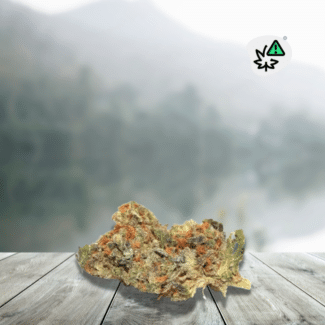 From €9/g Price range: €26.00 to €450.00
 -
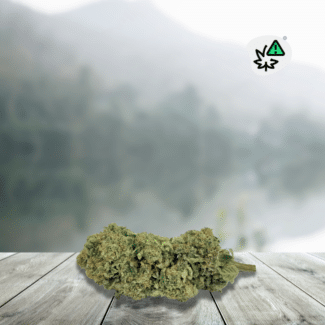 From €9/g Price range: €26.00 to €450.00


THCX: Understanding this cannabinoid, its composition and its characteristics
THCX that have recently appeared on the European cannabinoid market. Still relatively unknown to the general public, it raises many questions regarding its composition, origin, differences from THC or CBD, and also its regulatory status.
Before considering a product marketed as containing THCX, one point is crucial: the term THCX should not automatically be considered the scientific name of a precisely identified cannabinoid. Depending on the manufacturer and the formulations available on the market, this term may refer to a formulation or mixture whose exact composition must be determined from the product's technical data sheet and, above all, its certificate of analysis.
This distinction is particularly important in a sector where new commercial names regularly appear.
On this page, you can discover key information to better understand THCX, its differences from more well-known cannabinoids, the importance of laboratory analysis, and precautions to take with new cannabinoids.
What is THCX?
THCX is a name found on some hemp-derived products marketed on the new cannabinoids market.
Unlike CBD (cannabidiol) or delta-9-THC (tetrahydrocannabinol), whose chemical structure and characteristics are widely documented in scientific literature, the term THCX does not necessarily benefit from a single scientific definition allowing the composition of a product to be automatically deduced.
This is a fundamental point.
Two products sold under similar names may potentially have different formulations. Therefore, the name on the packaging is not enough to determine precisely which cannabinoids are present.
To determine the actual composition of a THCX reference, you must examine:
- the detailed list of ingredients;
- the nature of the cannabinoids present;
- their respective concentrations;
- the batch analysis certificate;
- the measured content of delta-9-THC;
- the analytical methods used;
- the identification of the laboratory that carried out the analyses.
For new cannabinoids, traceability should always take precedence over the trade name.
THCX: cannabinoid or trade name?
This is probably one of the most important questions regarding THCX.
When a new molecule is scientifically identified, it normally has a defined chemical structure and a nomenclature that allows researchers to talk about exactly the same compound.
A commercial name works differently.
It can be used to refer to a formulation developed by a manufacturer, a mixture of cannabinoids, or a particular technology.
Therefore, "THCX" should not be automatically interpreted as a universally defined molecule simply because its name resembles THC.
This caution also prevents the creation of misleading comparisons such as:
"THCX = X times more powerful than THC.".
Without reliable pharmacological studies focusing precisely on the compound in question, this type of claim cannot be considered scientifically established.
Why is the composition of a THCX product essential?
To understand a product containing THCX, its name is only the first level of information.
Its composition is much more important.
A reliable certificate of analysis can provide information on the presence and concentration of different cannabinoids.
Depending on the formulations, an analysis may look for molecules such as:
- CBD;
- CBDA;
- CBG;
- CBGA;
- CBC;
- CBN;
- delta-9-THC;
- THCA;
- other cannabinoids identified by the laboratory.
However, the exact composition must be verified product by product and batch by batch.
This precaution is particularly relevant for enriched or processed products, as their cannabinoid profile can be very different from that of a naturally harvested hemp flower.
THCX and THC: what are the differences?
The association between the terms THCX and THC is natural, but the two names should not be confused.
Delta-9-THC is one of the most studied cannabinoids in cannabis. Its structure, pharmacological activity, and psychoactive effects are extensively documented.
The situation is different for THCX.
If the name used does not correspond to a precisely documented scientific molecule, it is not possible to automatically transpose the available knowledge about THC to THCX.
In other words:
A similarity in name does not demonstrate either a chemical similarity or a pharmacological equivalence.
This rule applies to many new names appearing on the cannabinoid market.
THCX and CBD: two categories not to be confused
CBD is a cannabinoid naturally present in Cannabis sativa L. It is the subject of considerable scientific literature and does not have the same pharmacological profile as delta-9-THC.
The term THCX belongs to a much more recent environment.
directly comparing CBD and THCX solely based on commercial names would be insufficient.
To make a relevant comparison, one would need to know precisely:
- the composition of the THCX product;
- the concentration of each of its cannabinoids;
- the chemical nature of the substances used;
- their pharmacology;
- the available toxicological data.
Without this information, a comparison presented as certain would be premature.
THCX and THCA: also beware of confusion
THCA naturalprecursor of THC found in the plant.
THCA and THCX are therefore not two interchangeable terms.
THCA has a clearly defined chemical identity. THCX, on the other hand, must be interpreted according to the formulation actually marketed under that name.
This distinction becomes particularly important when a consumer compares several categories of cannabinoids.
What do we really know about the effects of THCX?
Caution is essential on this issue.
To be able to scientifically attribute an effect to a substance, one must have, among other things:
- of a reliable chemical identification;
- pharmacological studies;
- toxicological data;
- information on the dose being studied;
- ideally controlled human studies.
Testimonials available online or commercial descriptions do not constitute sufficient scientific evidence.
Therefore, we must distinguish three categories of information:
The demonstrated effects
They require sufficiently robust scientific studies on the substance in question.
The reported effects
These may be personal experiences published by users. They remain subjective and do not allow us to predict the reaction of another person.
The sales arguments
These correspond to the descriptions used to present certain products. They should not be confused with scientific results.
This distinction is particularly important with newer cannabinoids.
Why do new cannabinoids require more caution?
The available historical data is one of the main differences between historical cannabinoids and newer substances.
CBD and THC have been the subject of research for several decades.
For some newer molecules or formulations, information may be much more limited regarding:
- their pharmacokinetics;
- their metabolism;
- their interactions;
- their long-term effects;
- their toxicology;
- their degradation products.
The absence of data does not necessarily mean that a compound is dangerous.
But it also does not mean that it has been proven safe.
This is precisely why transparency about the composition is essential.
The importance of laboratory analyses for THCX
When faced with a product containing an emerging cannabinoid, the certificate of analysis is a key piece of information.
A sound analytical document should ideally allow for the clear identification of:
The product analyzed
The certificate must be able to be linked to the batch in question.
The date of the analysis
An old analysis based on a different formulation is of little interest for evaluating the current product.
The cannabinoids being sought
The report should specify the molecules measured rather than simply presenting an overall figure.
Concentrations
The results should make it possible to understand what proportion of each cannabinoid was actually detected.
The laboratory
His identity and the methods used must be verifiable.
The simple mention "laboratory tested" therefore does not provide the same level of transparency as a genuine certificate of analysis that is accessible and attached to the batch.
THCX and terpenes
Terpenes are another important component of hemp-derived products.
These are aromatic molecules found in many plants. In cannabis, they contribute in particular to the characteristic olfactory profiles of different varieties.
Commonly encountered terpenes include:
- myrcene;
- limonene;
- beta-caryophyllene;
- alpha-pinene;
- linalool.
Depending on the formulation, products bearing the THCX label can have very different aromatic profiles.
Some strains may be inspired by fruity genetics, while others favor Haze, Kush, Diesel notes or gourmet profiles inspired by American varieties.
However, it is important to distinguish the terpene profile from the cannabinoid composition: an intense aroma does not provide information about the concentration or pharmacological activity of the product.
THCX flowers: why read the technical data sheet?
When a hemp flower is presented under the name THCX, several characteristics must be distinguished.
The first concerns the flower itself:
- variety ;
- origin ;
- cultivation method;
- size and structure of the heads;
- humidity ;
- aromatic profile.
The second concerns potential enrichment:
- exact nature of the compound added;
- concentration announced;
- application method;
- homogeneity;
- post-formulation analyses.
A concentration displayed as "20%", for example, must always be interpreted in light of the corresponding certificate of analysis.
The advertised sales percentage does not replace an analytical measurement.
Indoor, greenhouse or outdoor: what does the growing method mean?
The cultivation method strongly influences the appearance and aromatic profile of a hemp flower.
Indoor growing
Indoor cultivation allows for precise control of several environmental parameters: lighting, temperature, humidity, and air circulation.
The resulting flowers can exhibit a particularly regular and compact structure.
Greenhouse cultivation
The greenhouse, or greenhouse cultivation, combines natural light and a partially controlled environment.
It represents a common compromise between controlling cultivation and utilizing the sun.
Outdoor growing
Outdoor cultivation takes place outdoors and is more dependent on natural conditions.
However, the cultivation method alone cannot determine the quality or cannabinoid composition of a flower. Batch analysis remains necessary.
THCX and regulations in France
The legal framework for cannabinoids is a particularly evolving subject.
It is not enough for a product to be derived from hemp or to have a delta-9-THC level below a certain value to automatically conclude that all the substances in its composition are permitted.
Authorities can individually regulate certain molecules or families of substances.
Therefore, a distinction must be made:
- the regulations applicable to hemp;
- the rules concerning delta-9-THC;
- the possible classification of other cannabinoids;
- the exact composition of the finished product.
For an emerging cannabinoid, legal status must be verified based on its true chemical identity, and not just on its trade name.
THC less than 0.3%: what does this value really mean?
The 0.3% threshold is frequently associated with hemp in the European Union and France, but its legal application depends on the product, its context and the relevant texts.
It is therefore best to avoid a common shortcut:
"Less than 0.3% THC = automatically legal.".
This formula is too general for products containing new cannabinoids.
A product may require review of other regulatory criteria independently of its delta-9-THC content alone.
THCX and driving: an essential precaution
Driving is a particularly important issue when dealing with cannabinoids that may have psychoactive activity or when the exact composition of a product is not fully established.
The presence of THC can also pose a problem during roadside screening.
As a precaution, a product that may impair alertness should not be used in conjunction with driving a vehicle or operating machinery.
The mention of a low THC level on a label should not be interpreted as a guarantee of no risk during an inspection.
How can we seriously evaluate a product presented as THCX?
Faced with the proliferation of new cannabinoids, some information helps to distinguish a transparent presentation from a simple marketing ploy.
It is particularly important to look for:
- the complete composition;
- the concentration of each active substance;
- a recent certificate of analysis;
- the batch number;
- the identity of the laboratory;
- the actual THC content;
- the origin of the hemp;
- usage warnings;
- clear information on the emergent nature of the compound.
The more recent and less documented a substance is, the more important this information becomes.
THCX, THC, CBD and new cannabinoids: better understanding before comparing
The cannabinoid market is evolving rapidly, and consumers are now faced with a multitude of acronyms.
CBD, CBG, CBN, CBC, THC, THCA and various emerging names do not necessarily refer to comparable substances.
The first instinct should therefore be to look for what is really behind the name.
For THCX, this approach is particularly important.
Reliable information should begin with identifying the formulation, not with promises of potency or dramatic comparisons to THC.
THCX FAQ
What is THCX?
THCX is a term found on some cannabinoid products. Its exact meaning should be verified with the manufacturer and through the product's composition and analysis, as the term should not be automatically assumed to refer to a scientifically standardized molecule.
Is THCX THC?
Not necessarily. The similarity of the names is not enough to demonstrate that it is delta-9-THC or a compound possessing exactly the same properties.
What is the difference between THCX and CBD?
CBD is a precisely identified and widely studied cannabinoid. To seriously compare a THCX product to CBD, one must first know the exact composition of the THCX formulation in question.
Is THCX psychoactive?
It is not possible to answer this question definitively based solely on the term "THCX". It depends on the substance or mixture actually present in the product and the available pharmacological data concerning it.
Is THCX more potent than THC?
Claims that an emerging cannabinoid is several times more potent than THC require solid pharmacological evidence. A marketing claim or anecdotal evidence cannot scientifically establish such an equivalence.
How can I determine the composition of a THCX flower?
You must consult the detailed composition and, above all, the certificate of analysis corresponding to the batch of the product.
Why verify laboratory analyses?
The analyses allow us to verify which cannabinoids have been detected and their concentrations. They provide much more precise information than the product's trade name alone.
Is a product with less than 0.3% THC necessarily legal?
No. The threshold for THC alone does not allow for the determination of the legal status of all other substances that may be present in a formulation.
Is it safe to drive after using THCX?
Driving should be avoided while under the influence of any substance that may impair alertness or expose the driver to the presence of THC. Roadside drug testing should also be considered.
Why is THCX attracting so much attention?
The regular appearance of new cannabinoid formulations naturally sparks consumer interest. But this novelty makes transparency, independent analyses, and the distinction between scientific data and marketing claims all the more important.
THCX: Prioritizing transparency over promises
THCX perfectly illustrates the rapid evolution of the cannabinoid market. Behind a new name can lie very different formulations, making a careful reading of the composition and certificates of analysis essential.
Rather than presenting THCX as a simple alternative to THC or as a cannabinoid whose effects are already perfectly known, a serious approach is to distinguish what is established from what still needs to be documented.
Detailed composition, independent analyses, traceability, regulatory information and warnings are therefore the main criteria to examine.
This transparency allows for a better understanding of THCX products and, more broadly, helps navigate a cannabinoid market where innovations and new names are evolving particularly rapidly.
Product for adults only. Do not use before driving or operating machinery. Keep out of reach of children. Not recommended for pregnant or breastfeeding women. Non-medicinal product.
Official sources on THCX
- ANSM: Classification of new cannabinoids
- ANSM Regulatory Decision
- French Consolidated List of Narcotics
- New psychoactive substances in Europe
- Semi-synthetic cannabinoids
- European dossier on synthetic cannabinoids
- Analysis of emerging cannabinoids
- Be vigilant about the actual composition
- Risks associated with the new substances market
- Drugs Info Service: Synthetic cannabinoids
THCX alone cannot identify a specific molecule. The detailed formulation must be clearly communicated.