



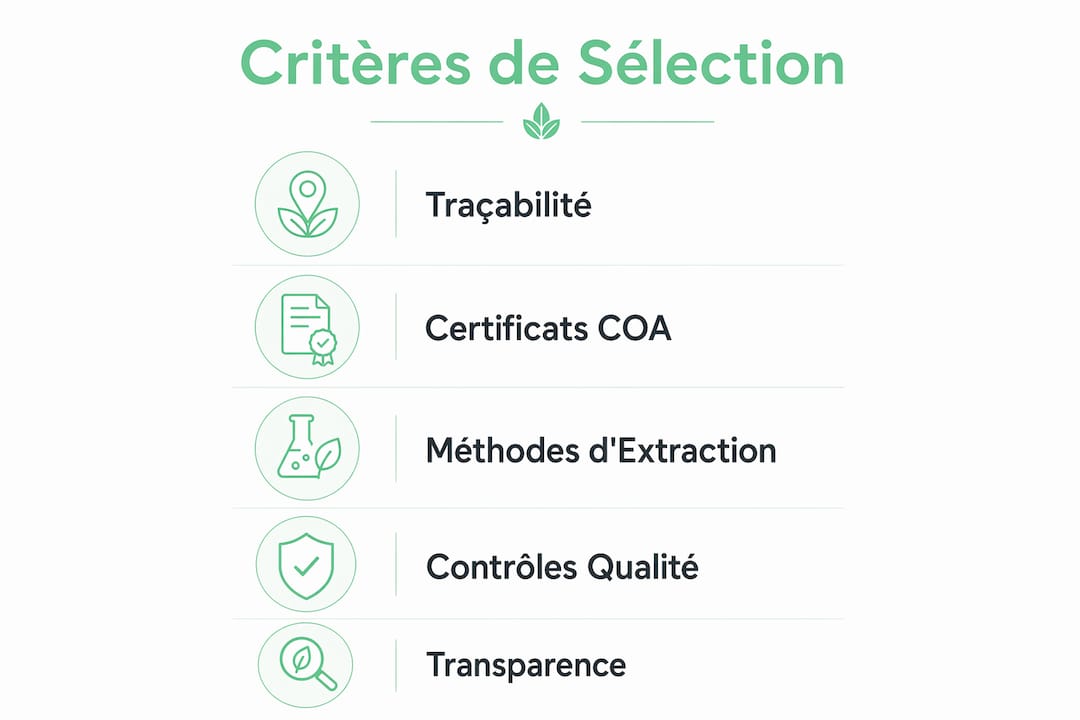
Selecting a CBD producer or supplier is based on non-negotiable criteria: complete traceability, certificates of analysis compliant with ISO 17025, and a THC content strictly less than or equal to 0.3%. These requirements are not optional in 2026. European and French regulations impose rigorous documentation at every link in the chain. Producers and distributors who neglect these criteria risk DGCCRF (French Directorate General for Competition Policy, Consumer Affairs and Fraud Control) inspections, batch recalls, and a loss of commercial credibility. Lord Of CBD applies these standards to every product in its range, from seed to delivery.
What are the essential regulatory criteria for choosing a CBD supplier?
The Certificate of Analysis (COA) is the cornerstone of any serious supplier relationship. Any valid COA must be less than 6 months old, issued by an independent laboratory accredited to ISO 17025, and confirm a THC level ≤ 0.3%. An older document or one from an in-house laboratory does not constitute sufficient assurance.
Compliance with THC levels is a batch-by-batch requirement, not a per-product-specific requirement. Each delivered batch must have its own recent and accurate Certificate of Analysis (COA). A supplier providing a generic COA valid for an entire product range is not complying with current regulations.
Accounting documents are also part of the selection criteria. Compliant invoices, delivery slips, and traceable batch numbers form the backbone of a secure supply chain. Here are the documents to systematically require:
- Certificate of Authenticity (COA) dated less than 6 months prior to shipment, issued by an ISO 17025 accredited laboratory
- THC content ≤ 0.3% analytically confirmed for each delivery
- Invoices compliant with batch number and geographical origin of hemp
- Supplier's SIRET number verifiable via Infogreffe
- Mention of the hemp variety used, as listed in the European catalogue
A supplier who refuses to provide their Certificates of Analysis (COA) before ordering or who offers undated documents is signaling a major legal and commercial risk. Document transparency is the primary selection filter, not a mere administrative formality.
How to assess the quality of CBD products offered by a supplier?
The extraction method directly determines the purity of the final product. Supercritical CO2 extraction preserves terpenes and cannabinoids without leaving solvent residue. Ethanol or hydrocarbon extractions are less expensive but generate more residual impurities, which affects the analytical quality of the product.
controls reveal that 81% of tested products had CBD levels that did not match their labeling. This figure illustrates the scale of the problem in the market and justifies independent analytical verification before any products are placed in stock.
Labeling is an immediate indicator of quality. A quality product displays the CBD content, THC content, hemp origin, batch number, and manufacturing date. The absence of any of these elements is a red flag.
The different CBD spectrums cater to distinct uses:
- CBD isolate : maximum purity, free of terpenes and other cannabinoids, suitable for pharmaceutical or cosmetic formulations
- Broad spectrum : broad spectrum without detectable THC, used for consumer products
- Full spectrum : contains all natural cannabinoids including traces of THC ≤ 0.3%, valued for the entourage effect
Products without a clear Certificate of Analysis (COA) or bearing therapeutic claims are major red flags. Unauthorized health claims expose the distributor to direct sanctions from the French Directorate General for Competition Policy, Consumer Affairs and Fraud Control (DGCCRF).
Pro tip: Always request a sample before placing any bulk order. Perform a sensory check (color, texture, consistency) and have the sample analyzed by an independent laboratory. This low unit cost protects against much larger losses.
Why are traceability and transparency key factors?
Complete traceability covers the entire cycle: seed, cultivation, harvesting, extraction, packaging, and delivery. A reliable supplier consistently provides traceability documents from seed to certificates of analysis and professional technical support. This documented chain protects the distributor in the event of an inspection.
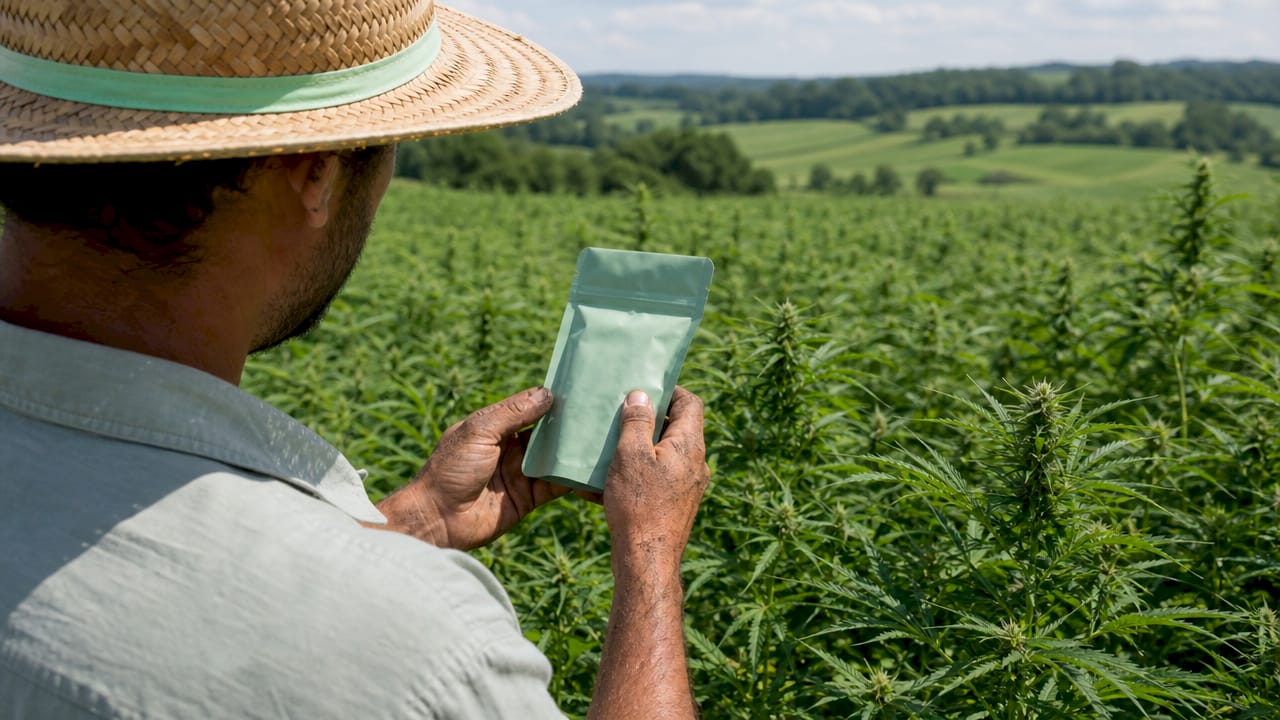
Displaying analysis results on shelves or via QR code has become a key differentiating factor. Transparency through QR codes protects the retailer during DGCCRF (French Directorate General for Competition Policy, Consumer Affairs and Fraud Control) inspections and strengthens customer trust. A retailer that displays its Certificates of Analysis (COAs) at the point of sale immediately stands out from those that don't.
| Traceability criteria | What he guarantees |
|---|---|
| Geographical origin of hemp | Compliance with varieties authorized in Europe |
| Batch number on each package | Targeted withdrawal in case of non-compliance |
| COA accessible via QR code | Immediate verification by the client or inspector |
| Compliant transport documents | Legal proof of the chain of custody |
| Annual supplier audit | Maintaining the level of compliance over time |
Verifying the supplier's legal information is part of the basic audit. The SIRET number, company history, and the absence of any ongoing legal proceedings can be verified free of charge via Infogreffe. A supplier without a stable history or with a recently registered SIRET number warrants increased scrutiny.
Short supply chains and local sourcing reduce logistical risks and improve traceability. A CBD producer in France, subject to French regulations, offers greater legal security than a supplier from outside the European Union.
Pro tip: Integrate an annual supplier audit into your internal process. Verify that Certificates of Analysis (COAs) are up-to-date, labeling is compliant, and the partner's financial stability is sound. Consolidating official documents into a structured supplier file minimizes business risks.
What strategies should be adopted to secure one's CBD supply?
Dependence on a single supplier is the most common and avoidable risk. Here are the best practices to implement for reliable procurement:
-
Diversify your supply sources. Never work with a single supplier. Prioritize at least two geographically distinct partners to absorb stock shortages, weather-related disruptions, or local regulatory barriers.
-
Always verify the company's administrative soundness. Check the SIRET number via Infogreffe before placing any first order. Verify the absence of insolvency proceedings and the company's long history. A supplier established less than 12 months ago without verifiable references presents a high risk.
-
Negotiate volume-based pricing. A good supplier commits to the long term with responsive customer support, regulatory assistance, and volume-appropriate discounts. These terms should be negotiated from the outset, not after several orders.
-
Cut out the middleman whenever possible. Direct contact with the farm or laboratory can save up to 20% on gross margin. However, this approach requires expertise in genetic selection and crop cycle management that few distributors possess in-house.
-
Test each new batch before stocking. No supplier's Certificate of Analysis (COA) can replace independent analytical testing on a representative sample. This process must be systematic, not ad hoc. Detecting a non-compliant batch before it reaches the shelves prevents costly recalls and reputational damage.
-
Evaluate the responsiveness of technical support. A reputable supplier answers regulatory questions, provides document updates without reminders, and offers a dedicated contact person. The quality of support is a reliable indicator of the partner's operational maturity.
Diversifying suppliers protects against logistical and legal risks while maximizing supply capacity. This rule applies regardless of the size of the organization.
Key points
Selecting a CBD supplier is based on three non-negotiable pillars: documentary compliance, complete traceability, and diversification of supply sources.
| Point | Details |
|---|---|
| COA required per batch | Demand an ISO 17025 certificate, dated less than 6 months ago, with THC ≤ 0.3% for each delivery. |
| Seed traceability to delivery | A reliable supplier documents every step of the cycle, from the variety grown to the batch number on the shelf. |
| Diversification of partners | Work with at least two separate suppliers to avoid any supply disruptions. |
| Prior administrative check | Check the SIRET number via Infogreffe and the legal history before placing your first order. |
| Independent analytical test | Have each new batch analyzed by a third-party laboratory before being put into stock, without exception. |
What the field has taught me about choosing a CBD supplier
The CBD market still attracts too many businesses that rely solely on low price as their selling point. This is the most misleading criterion there is. A batch priced 15% lower than the market rate without a recent Certificate of Authenticity (COA) actually costs much more when it triggers a DGCCRF (French Directorate General for Competition Policy, Consumer Affairs and Fraud Control) inspection or a product recall.
What I consistently observe among distributors who succeed in the long term is that they treat supplier selection like an audit, not a commercial negotiation. They verify documents before discussing prices. They test samples before signing. They maintain continuous regulatory monitoring because French and European legislation evolves rapidly.
Analytical transparency has become a real competitive advantage. A distributor that displays its Certificates of Analysis (COAs) via QR code at the point of sale immediately stands out. Business clients and savvy consumers notice it. It also provides direct legal protection.
My most practical advice: never choose a supplier based solely on an online catalog or a sales presentation. Visit their facilities if possible. Ask for verifiable references. Demand a complete file before the first order. Supplier partnerships are built over time, not on a single transaction.
— Daniel
Lord Of CBD: a certified range for demanding professionals
Producers and distributors seeking a supply that meets 2026 standards will find a concrete solution at Lord Of CBD. Every product in their premium CBD range is made from organic hemp, with a guaranteed THC content of less than 0.3% per batch.
Lord Of CBD selects its producers according to rigorous criteria: complete traceability from seed to culture, independent certificates of analysis, and compliance with current French and European regulations. CBD wholesalers and distributors benefit from comprehensive documentation and complete transparency regarding product origin. For professionals who refuse to compromise on analytical quality, Lord Of CBD is a leading partner in the French market.
Frequently Asked Questions
What is a COA and why is it mandatory?
A Certificate of Analysis (COA) is a document issued by an independent laboratory accredited to ISO 17025 that confirms the composition of a batch of CBD. It is mandatory to prove regulatory compliance, particularly the THC level ≤ 0.3%, and protects the distributor during official inspections.
How to verify the reliability of a CBD supplier?
Check their SIRET number via Infogreffe, require Certificates of Analysis (COAs) dated within the last 6 months per batch, and ask for verifiable customer references. A reliable supplier will provide these documents promptly and without hesitation.
What is the difference between isolate, broad spectrum and full spectrum CBD?
The isolate contains only pure CBD. Broad spectrum includes several cannabinoids with no detectable THC. Full spectrum retains all the natural compounds of hemp, including traces of THC ≤ 0.3%, which generates a more pronounced entourage effect.
Why diversify your CBD suppliers?
Working with at least two geographically distinct suppliers protects against stockouts, weather-related risks, and local regulatory constraints. Diversification ensures continuity of supply without dependence on a single partner.
Is it possible to bypass intermediaries to buy CBD in bulk?
Yes, direct contact with the farm or laboratory can increase gross margin by up to 20%. However, this approach requires expertise in genetic selection and crop cycle management that not all distributors possess in-house.