



Cannabidiol (CBD) is defined as a non-psychoactive molecule that induces a natural calming effect by modulating several neurochemical systems linked to anxiety and stress. Unlike THC, it does not alter perception or judgment. Its action is based on a precise interaction with the endocannabinoid system and 5-HT1A serotonergic receptors. The WHO confirmed in 2018 that CBD does not create addiction or tolerance, which radically distinguishes it from conventional anxiolytics. Understanding why CBD has a calming effect is the first step toward its informed use.
What biological mechanisms explain the calming effect of CBD?
CBD acts on several neurochemical pathways simultaneously, which explains the diversity of its calming and relaxing effects. This multi-target action differentiates it from molecules with a single mechanism, such as benzodiazepines.

The central role of the endocannabinoid system
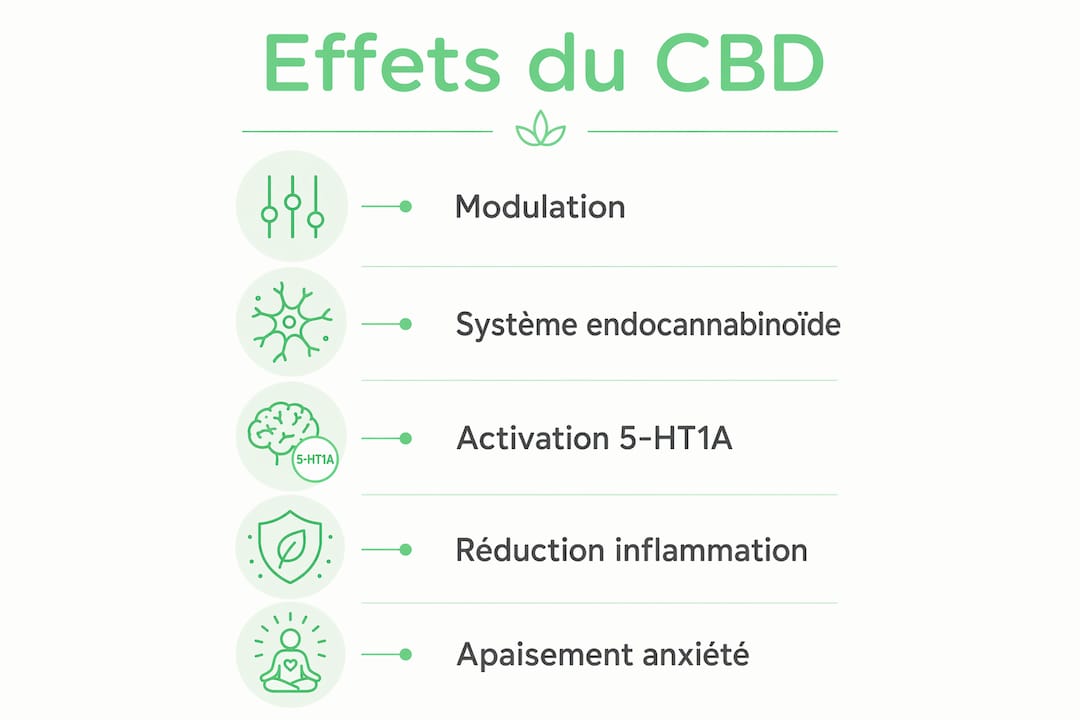
The endocannabinoid system (ECS) regulates mood, stress response, and sleep quality. It is composed of CB1 receptors (found primarily in the brain) and CB2 receptors (more prevalent in the immune system). CBD does not bind directly to these receptors like THC. It modulates them indirectly by inhibiting the breakdown of anandamide, a natural neurotransmitter nicknamed the "happiness molecule.".
Anandamide plays a key role in regulating fear and anxiety. When CBD increases its concentration, the brain circuits associated with stress calm down. This is an endogenous mechanism, meaning that CBD amplifies a response that the body already produces naturally.
Interaction with serotonergic receptors
CBD modulates 5-HT1A serotonin receptors , a neurotransmitter directly linked to the regulation of mood and anxiety. This interaction produces an anxiolytic effect without involving the dopaminergic pathways responsible for the psychoactive effects of THC. This is precisely why CBD calms without producing a "high."
A study conducted at the University of Colorado confirms that CBD reduces acute tension and anxiety symptoms better than THC, with fewer side effects. This finding is significant: it validates the use of CBD for anxiety without the risks associated with recreational cannabis. To delve deeper into the differences between CBD and THC, the mechanisms are detailed and documented.
The effects on neuroinflammation and fear circuits
CBD also possesses anti-inflammatory properties in the brain. Neuroinflammation is associated with chronic anxiety disorders and depression. By reducing this inflammation, CBD contributes to a more stable neurological environment.
Here are the main ways in which CBD acts to promote calmness:
- CB1 and CB2 receptors : indirect modulation via anandamide, reducing stress reactivity
- 5-HT1A receptors : partial activation producing an anxiolytic effect similar to that of SSRI antidepressants, without their side effects
- Inhibition of anandamide reuptake : maintaining a higher level of this calming neurotransmitter
- Reduction of neuroinflammation : action on the circuits of fear and mental rumination
- No action on dopamine : no psychoactive effect, no alteration of consciousness
Pro tip: If you're looking for a relaxing effect without drowsiness, take CBD in the middle of the day rather than in the evening. CBD's calming effect isn't sedative: it reduces mental tension without causing forced sleep.
What clinical evidence supports the relaxing effect of CBD on anxiety?
Clinical studies on CBD and anxiety have increased since 2015. The results are encouraging, but deserve to be read carefully to avoid over-interpretations.
What clinical trials actually show
A single dose of 400 to 600 mg of CBD significantly reduces social anxiety during public speaking tasks. This result is measured objectively: heart rate, salivary cortisol, and self-reported anxiety. The reduction is clinically significant, not just perceived.
These dosages are, however, very high compared to commercially available products. The effective doses in the laboratory (300–600 mg) far exceed the usual commercial doses, which range from 10 to 50 mg. This difference explains why some people do not experience any noticeable effect with standard market products.
"CBD is a promising natural supplement for managing mild to moderate stress and anxiety. It is not a substitute for medical supervision, but its safety profile makes it a serious option to explore with a healthcare professional."
Source: CBD and anxiety, a comparative study of THC vs CBD
Comparative table of effects according to anxiety disorders
| Type of anxiety | Level of clinical evidence | Dosage studied | Observed result |
|---|---|---|---|
| Social anxiety | Pupil | 400–600 mg (single dose) | Measurable reduction in tension and cognitive stress |
| Generalized anxiety | Moderate | Variable | Improvement in perceived well-being over several weeks |
| PTSD (post-traumatic stress disorder) | Preliminary | Variable | Reduction of nightmares and hypervigilance |
| Performance anxiety | Moderate | 300–400 mg | Decreased heart rate and blood pressure |
Limitations to be aware of before concluding
The studies have real limitations. Individual variability is significant: two people with the same profile can react differently to CBD depending on their genetics, microbiome, and baseline stress level. Furthermore, most trials involve single doses in a laboratory setting, not prolonged daily use.
The effectiveness of CBD varies depending on individual sensitivity, lifestyle, and the adoption of an overall healthy routine. This point is fundamental: CBD is not a miracle pill. Its relaxing effect is part of a broader set of behaviors that promote well-being. The factors influencing the effects of CBD based on your individual profile deserve to be explored before choosing a product.
How do the dose and form of administration influence the calming effect?
Dosage is the most underestimated variable in CBD use. Choosing the right form and quantity directly determines the intensity and speed of the calming effect.
The three main avenues of administration
-
Sublingual administration (oil under the tongue) : the effect appears within 20 to 30 minutes. The oral mucosa absorbs the CBD directly into the bloodstream, bypassing the liver. This is the fastest and most predictable route for a targeted calming effect.
-
Oral route (capsules, food) : the effect can take up to 2 hours. CBD passes through the digestive system and liver, which reduces its bioavailability. This route is better suited for regular, preventative use than for managing acute episodes.
-
Inhalation (vaporized flowers) : the effect is almost immediate (within minutes). Bioavailability is high, but this method requires additional precautions related to respiratory health. It is not recommended for people with lung conditions.
How to gradually adjust your dose
Starting with a low dose and gradually increasing it is the recommended method for assessing personal tolerance and effectiveness. Here is a structured approach:
- Week 1 : 10–15 mg daily, taken sublingually in the morning or evening
- Week 2 : Increase to 20–25 mg if no noticeable effect is felt
- Week 3 : Adjust according to how you feel, possibly splitting the dose into two administrations.
- Week 4 and beyond : stabilize the effective dose and evaluate over time
The practical guide on CBD dosage for beginners details this approach with concrete guidelines based on weight and anxiety level.
Pro tip: Keep a log of your intake for the first four weeks. Note the dose, form, time, and your emotional state before and after. This personal data is far more reliable than any generic recommendation.
What are the real benefits of CBD for emotional well-being?
CBD indirectly improves mood by promoting relaxation, better sleep quality, and reduced mental tension. It does not directly treat psychiatric disorders. This is a crucial distinction that many people overlook.
The tangible benefits observed in regular users include:
- Reduced mental tension : less rumination, better ability to "switch off" in the evening
- Improved sleep : faster sleep onset and less fragmented sleep, without a direct sedative effect
- Managing occasional stress : a relaxing effect perceived during stressful situations (exams, public speaking, professional conflicts)
- Emotional stability : fewer peaks of irritability over time, according to testimonials from regular users.
- Non-addictive : CBD does not create a habit, allowing for intermittent use without withdrawal symptoms.
CBD requires at least several days of regular use to develop a noticeable anxiolytic effect. Unlike conventional anxiolytics with immediate action, its effect develops gradually. This characteristic is often misunderstood and leads to premature discontinuation.
CBD indirectly improves mood by reducing stress and improving sleep, but it is not a direct treatment for psychiatric disorders. This distinction is essential for setting expectations. CBD should be used as part of a wellness routine, not as a replacement for medical care. Its effects are amplified when combined with practices like meditation: the combination of CBD and meditation is documented as particularly effective for managing chronic stress.
Key points
CBD produces a real calming effect through its action on 5-HT1A serotonergic receptors and the endocannabinoid system, without psychoactive effect or risk of addiction confirmed by the WHO.
| Point | Details |
|---|---|
| Validated mechanism of action | CBD modulates 5-HT1A receptors and inhibits the breakdown of anandamide to reduce anxiety. |
| Difference between clinical and commercial doses | Studies use 300–600 mg; commercial products typically contain 10–50 mg per dose. |
| Fastest route: sublingual | The oil under the tongue takes effect in 20–30 minutes, compared to up to 2 hours for oral capsules. |
| Gradual use is essential | Starting with a low dose and increasing it over several weeks is the most reliable method. |
| Supplement, not a medical substitute | CBD fits into a wellness routine and does not replace medical supervision for severe anxiety disorders. |
What I've learned about CBD as a calming agent after years of following this market
The question I get asked most often is, "But does it really work?" My honest answer is yes, but not in the way most people hope.
CBD does not produce an immediate and dramatic effect. People who give up after three days saying "it does nothing" are making the classic mistake of comparing a molecule with a gradual action to a chemical anxiolytic with an immediate effect. It's not the same tool, it's not the same goal.
What I observe in users who truly benefit from it is consistency over several weeks, combined with attention to their overall lifestyle. CBD doesn't compensate for chronic sleep deprivation or untreated structural stress. It amplifies the effects of a routine already geared towards calmness.
The other common mistake concerns product quality. The variability in the actual CBD content of available products poses a real clinical challenge. Buying from certified brands that are transparent about their analyses is not a luxury; it's a basic requirement for reproducible effects. An incorrectly dosed or poorly extracted product will produce no results, regardless of how regularly it's taken.
Finally, I always recommend mentioning your CBD use to your doctor, especially if you are currently undergoing treatment. This isn't out of an abundance of caution, but because certain drug interactions exist and deserve to be evaluated by a professional.
— Daniel
Lord Of CBD and the search for a reliable natural calming effect
Choosing a CBD product for its relaxing effects starts with the quality of the source. Lord Of CBD selects certified producers with a THC level below 0.3% and available analyses for each batch. This transparency ensures that the stated dose corresponds to what you actually consume.
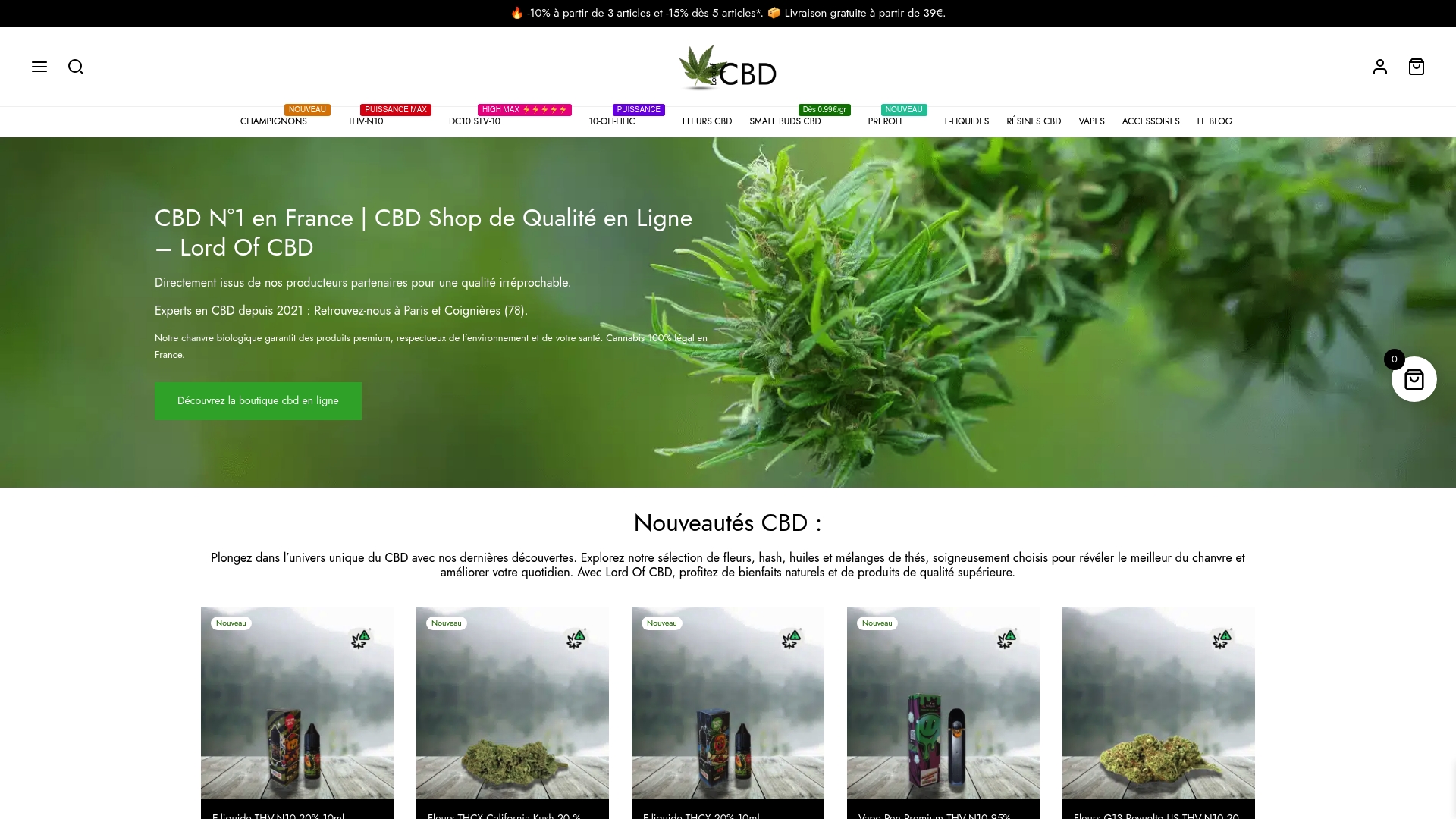
The benefits of CBD for chronic anxiety are well-documented, but they depend directly on the quality of the product used. Lord Of CBD offers a selection of flowers and resins made from organic hemp, suitable for different profiles and levels of sensitivity. For those who wish to try several formats before committing, the My CBD Box allows you to explore different products in a safe and gradual way. An informed approach starts with reliable products.
Frequently Asked Questions
Why does CBD have a calming effect without being psychoactive?
CBD acts on 5-HT1A serotonergic receptors and inhibits the breakdown of anandamide, without binding to CB1 receptors responsible for the psychoactive effects of THC. It calms without impairing consciousness or judgment.
How long does it take to feel the relaxing effect of CBD?
When taken sublingually, the effect appears within 20–30 minutes. When taken orally (capsules), it can take up to 2 hours. Regular use over several days is necessary for a stable anxiolytic effect.
What dose of CBD is effective against anxiety?
Clinical trials use doses of 300–600 mg for measurable effects on social anxiety. Commercial products typically contain 10–50 mg per dose. Starting with a low dose and gradually increasing it remains the safest approach.
Is CBD addictive?
No. The WHO confirmed in 2018 that CBD does not create addiction or tolerance. It can be used intermittently without risk of withdrawal, unlike conventional anxiolytics.
Does CBD replace medical treatment for anxiety?
No. CBD is a natural supplement for managing mild to moderate stress and anxiety. For severe anxiety disorders or diagnosed psychiatric conditions, medical supervision remains essential.