



Contaminants found in low-quality CBD products include heavy metals, residual solvents, pesticides, and mycotoxins. These substances result from poor cultivation practices and uncontrolled extraction processes. The most documented examples of contaminants in low-quality CBD products include lead, cadmium, hexane, and aflatoxins. Each of these contaminants poses real health risks, often invisible to the naked eye. A comprehensive Certificate of Analysis (COA), issued by a laboratory accredited to ISO 17025, is the only reliable way to detect them before consumption.
1. What heavy metals are found in low-end CBD products?
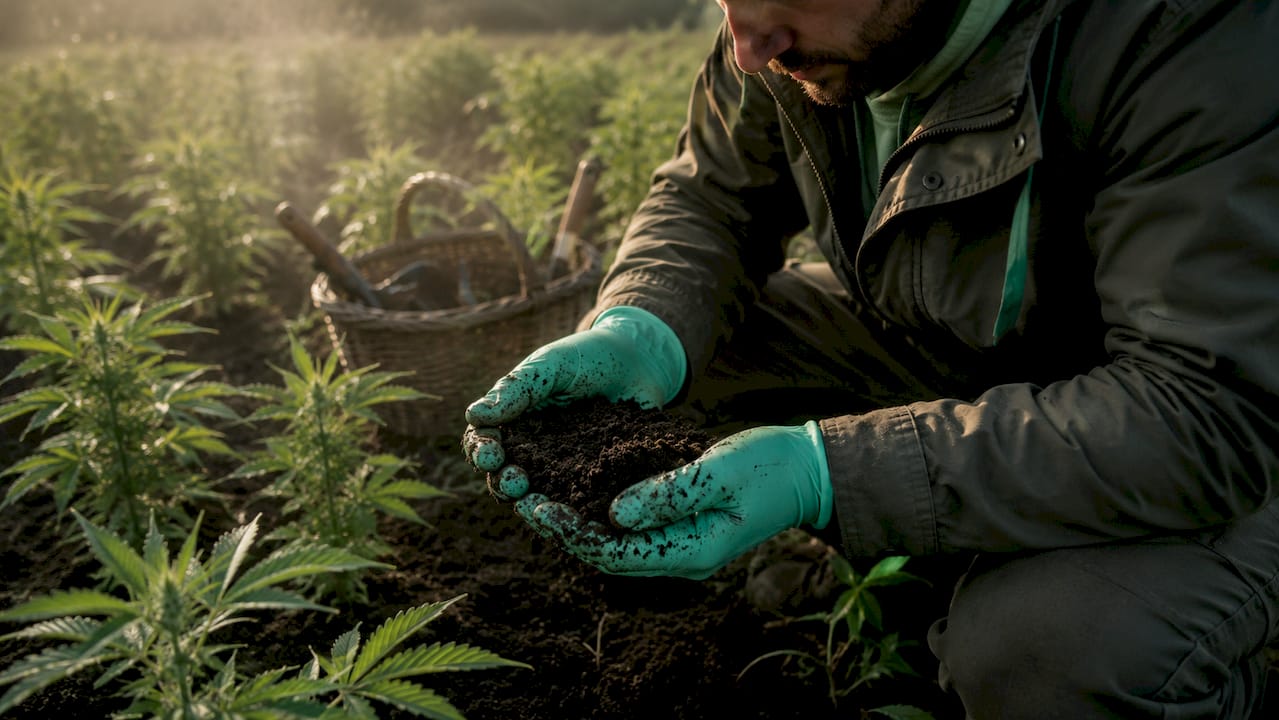
Hemp is a bioaccumulating plant. It absorbs toxins from the soil and concentrates heavy metals in its tissues, making it a crop particularly sensitive to the quality of agricultural land.
The most frequently detected heavy metals in low-end CBD products are:
- Lead : affects the nervous system, particularly dangerous for children and pregnant women.
- Cadmium : accumulates in the kidneys and causes long-term bone problems.
- Arsenic : a known carcinogen, present in soils contaminated by phosphate fertilizers.
- Mercury : neurotoxic, often originating from industrial soils or certain older pesticides.
Low-end producers often cultivate hemp on uncertified land, without prior soil analysis. The hemp then absorbs these metals and transfers them directly into the final extract. European regulations set strict limits for these substances in food supplements, but products sold outside of controlled channels do not always comply with these limits.
Pro tip: Before buying a CBD product, check that the Certificate of Analysis (COA) explicitly states the results for lead, cadmium, arsenic, and mercury. A COA that only covers cannabinoids is insufficient.
2. What residual solvents are detected in poor quality CBD?
Residual solvents pose a risk that is often underestimated by consumers. During CBD extraction, some manufacturers use chemical solvents to separate the cannabinoids from the plant. When this purging step is not performed correctly, residues remain in the final product.
The most frequently found solvents are:
- Hexane : neurotoxic petroleum solvent, limit set at less than 290 ppm according to ICH Q3C standards.
- Butane : used in artisanal extractions, limited to less than 2 ppm according to the same standards.
- Ethanol : less toxic, but high residues alter the taste and quality of the product.
Analyses have shown that these thresholds were exceeded in 15 to 30% of the products tested. This figure reveals the extent of the problem in the low-end segment.
A CBD product without a Certificate of Analysis (COA) detailing residual solvents cannot be considered safe. The absence of this information is itself a warning sign.
Inhaling or regularly ingesting these solvents causes headaches, nausea, and, at high doses, neurological damage. CBD vapers are particularly at risk because the heat concentrates the residues during vaporization.
3. What pesticides are found in low-end CBD products?
Pesticides are among the most closely monitored contaminant families in plant extracts. The DGCCRF (French Directorate General for Competition Policy, Consumer Affairs and Fraud Control) recorded non-compliance rates of 8 to 12% for organochlorine and pyrethroid pesticides in plant extracts between 2023 and 2024. These figures demonstrate that the problem is active and documented, not theoretical.
The most problematic pesticides in CBD products are:
- Organochlorines : persistent in the environment, they accumulate in fats and lipid extracts such as CBD oils.
- Pyrethroids : potential endocrine disruptors, frequently used in non-certified organic crops.
Full-spectrum oils are particularly vulnerable. The extraction process concentrates not only the cannabinoids but also the pesticides present in the plant. An extract can contain pesticide levels far exceeding those found in the raw flower.
Pro tip: Opt for products made from certified organic hemp. The AB certification or equivalent European certification guarantees the absence of synthetic pesticides in the crop, drastically reducing this risk.
The quality of CBD flowers depends directly on cultivation practices. Hemp grown without pesticides on certified land produces a significantly cleaner extract.
4. What mycotoxins and microbiological contaminants threaten low-grade CBD?
Mycotoxins are toxins produced by molds. They appear when hemp is improperly dried or stored in humid conditions. Low-quality products, often packaged without rigorous controls, are particularly vulnerable.
The most concerning mycotoxins in CBD products are:
- Aflatoxins (B1, B2, G1, G2): liver carcinogens, classified among the most toxic substances of natural origin.
- Ochratoxin A : nephrotoxic, it damages the kidneys and the immune system.
EU Regulation 2023/915 sets the limit for total aflatoxins at 4 µg/kg in herbal food supplements. This limit aims to reduce the risk of fungal growth associated with improper storage.
Microbiological contamination has also been detected in CBD flowers sold online, including Aspergillus spp., Salmonella, and enterobacteria. These pathogenic bacteria and fungi are absent from properly processed and controlled products.
| Microbiological contaminant | Main risk | Origin |
|---|---|---|
| Aspergillus spp. | Lung infections, mycotoxins | Wet storage |
| Salmonella | severe gastroenteritis | Insufficient hygiene |
| Enterobacteriaceae | Digestive infections | Uncontrolled manipulation |
| Aflatoxins | Liver cancer | Mold on poorly dried hemp |
5. How to compare low-grade CBD contaminants and assess their danger?
A full COA must cover at least six contaminant categories: cannabinoids, pesticides, heavy metals, mycotoxins, residual solvents and microbiology, according to ISO 17025 standards. A partial COA does not guarantee product safety.
| Contaminant | Main origin | Regulatory threshold | Health risk |
|---|---|---|---|
| Lead | Contaminated soil | Very low (µg/kg) | Neurotoxic |
| Hexane | Poorly purged extraction | Less than 290 ppm | Neurotoxic |
| Organochlorine pesticides | Non-organic farming | Forbidden traces | Endocrine disruptor |
| Total aflatoxins | Wet storage | 4 µg/kg (EU 2023/915) | Liver carcinogen |
| Aspergillus spp. | Drying failure | Absence required | Lung infection |
The difference between a low-end product and a high-quality product is precisely measured by this table. High-end products, made from organic hemp grown on certified land and extracted using supercritical CO2, consistently show results below regulatory thresholds for all these categories. Low-end products, on the other hand, have deficiencies in several columns simultaneously.
Reliable analytical methods include gas chromatography for solvents, mass spectrometry for heavy metals, and high-performance liquid chromatography for mycotoxins. These analyses are expensive, which is why lower-end manufacturers avoid them.
Key points
Low-end CBD products expose consumers to multiple and cumulative contaminants, detectable only by a full COA covering six families of substances.
| Point | Details |
|---|---|
| Heavy metals | Hemp absorbs lead, cadmium, arsenic and mercury from uncertified soils. |
| Residual solvents | Hexane and butane exceed their limits in 15 to 30% of the products tested. |
| Pesticides | The DGCCRF noted 8 to 12% non-compliance for pesticides in plant extracts. |
| Mycotoxins | Aflatoxins are limited to 4 µg/kg by EU Regulation 2023/915. |
| COA required | An ISO 17025 COA covering six contaminant families is the only reliable verification tool. |
What I've learned after years of observing the CBD market
The French CBD market has exploded in just a few years. This rapid growth has attracted serious players, but also many opportunists. What I regularly observe is that consumers focus on the CBD percentage listed on the label and ignore everything else.
This is a serious mistake. A product claiming 20% CBD could contain lead, hexane, and aflatoxins if it hasn't been properly tested. The cannabinoid content says nothing about the product's safety.
The uncomfortable truth is that a low price almost always indicates cost-cutting somewhere in the supply chain. This could be on the quality of the hemp, the extraction process, or the testing. It's rare that all three are cut without consequences. A full Certificate of Analysis (COA) costs several hundred euros per batch. Manufacturers pass this cost on to their customers. Those selling at rock-bottom prices generally don't.
My practical advice: always ask for the Certificate of Analysis (COA) before buying. If it's not available on the website or upon request, walk away. The toxicological safety of CBD depends as much on the absence of contaminants as on the molecule itself. A clean and well-tested product, even with only 10% CBD, is infinitely better than a product loaded with contaminants and labeled as containing 30%.
— Daniel
Choosing the right CBD to avoid contaminants
Knowing the risks is good. Knowing how to avoid them in practice is better. Lordofcbd selects only producers whose hemp is certified organic and whose every batch is analyzed by independent laboratories.
Lordofcbd's practical guide on how to choose a CBD oil details the essential criteria: hemp origin, extraction method, Certificate of Authenticity (COA) content, and warning signs to look out for. All Lordofcbd products have a THC content of less than 0.3% and are made from rigorously selected organic hemp. To better understand the nature of CBD and its quality standards, the page " CBD: Drug or Not?" provides clear and well-documented answers.
Frequently Asked Questions
What are the most dangerous contaminants in low-grade CBD?
Heavy metals (lead, cadmium, arsenic) and mycotoxins (aflatoxins) are the most dangerous because they accumulate in the body and cause long-term effects on the liver, kidneys and nervous system.
How can you tell if a CBD product contains residual solvents?
The only reliable way is to consult the product's Certificate of Analysis (COA). This document must state the results for hexane (limit: less than 290 ppm) and butane (limit: less than 2 ppm) according to ICH Q3C standards.
What is a COA and why is it essential?
A COA (Certificate of Analysis) is a document issued by an ISO 17025 accredited laboratory that certifies the analysis results of a batch of product. It must cover at least six categories of contaminants to guarantee the safety of the CBD product.
Are organic CBD products free of contaminants?
Products made from certified organic hemp present a significantly reduced risk of synthetic pesticides. However, they remain subject to the risks of residual solvents and mycotoxins if extraction and storage are not properly controlled.
Why are full-spectrum CBD oils more exposed to pesticides?
Extraction concentrates all the compounds present in the plant, including pesticides. A full-spectrum oil derived from pesticide-treated hemp can contain residue levels far exceeding those measured in the raw flower.