



The recommended CBD dosage for a beginner looking to manage anxiety is 10 to 15 mg per day, gradually increased according to individual tolerance. This starting point is based on the gradual titration method, recognized as the safest way to find an effective dose without adverse effects. Cannabidiol (CBD) acts on the endocannabinoid system to modulate the stress response, but its effectiveness depends directly on a dosage tailored to the level of anxiety. Lord Of CBD supports beginners with products made from organic hemp, lab-tested, for a safe introduction.
What factors influence the dosage of CBD for anxiety?
The optimal CBD dosage is not universal. Several personal variables determine the truly effective amount for each individual.
Body weight and product concentration
Body weight is the first parameter to consider. A 60 kg person will not react the same way as a 90 kg person to the same dose. The commonly used starting formula is 0.25 to 0.5 mg of CBD per kilogram of body weight per day. The concentration of the chosen product (5%, 10%, or 20% oil) then changes the number of drops needed to reach this dose.
Intensity of symptoms and form of the product
The intensity of anxiety directly influences the dosage range. Mild anxiety typically responds to 20–40 mg per day, while chronic anxiety may require 25–75 mg per day. The product form also plays a major role: sublingual oil offers faster absorption than capsules, and CBD resin exhibits varying bioavailability depending on the method of administration. Individual metabolism, liver function, and any current medications also affect the response to CBD. Drug interactions with anxiolytics or antidepressants should be checked before starting treatment.
Pro tip: If you are already taking medication for anxiety, consult your doctor before introducing CBD. The molecule can alter the metabolism of certain medications via the liver enzymes CYP450.
How to start CBD treatment for anxiety?
A structured protocol avoids the most common mistakes made by beginners: too high a dose from the start, irregular intake, or premature abandonment due to lack of visible results.
The step-by-step protocol
-
Calculate the starting dose. Multiply your weight in kg by 0.25 mg. For a person weighing 70 kg, this gives 17.5 mg per day. Round up to 15 mg to stay within the safe starting range of 10–15 mg recommended for beginners.
-
Divide the dose into two administrations. Take half in the morning and the other half in the evening. Splitting the daily dose into two administrations maintains a stable concentration in the blood and improves anxiety control throughout the day.
-
Use the sublingual route. Place the drops under your tongue and hold them there for 60 to 90 seconds before swallowing. This technique maximizes absorption because the CBD passes directly into the bloodstream without going through the digestive system.
-
Keep a daily journal. Each day, record your anxiety level on a scale of 0 to 10, the dose taken, the time, and the effects experienced. This tracking is essential to identify the optimal dose and avoid unnecessary expenses estimated at between €40 and €120 per month.
-
Increase the dose gradually every 3 to 7 days. If the effects are insufficient after one week, increase in increments of 5 to 10 mg. Never change the dose more than once a week.
Pro tip: Use dosage calculator to automatically convert the concentration of your bottle into the precise number of drops based on your weight.
Time before the first lasting effects appear
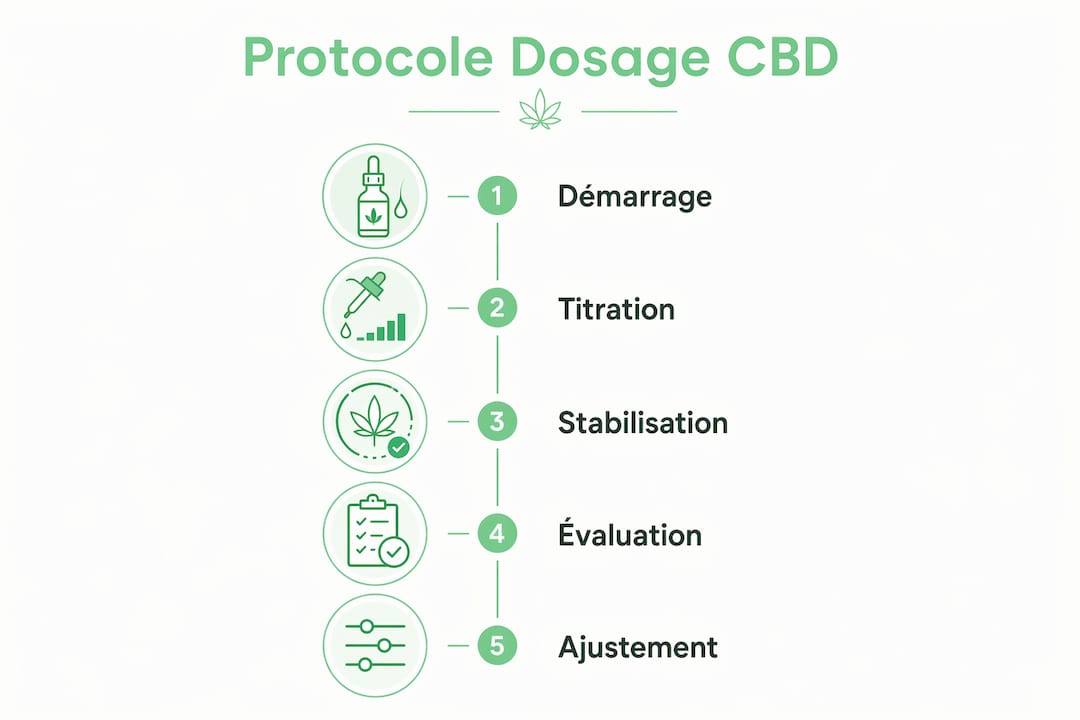
| Phase | Duration | Objective |
|---|---|---|
| Startup | Days 1–7 | Test tolerance at 10–15 mg/day |
| Titration | Weeks 2–3 | Increase in increments of 5–10 mg |
| Stabilization | Weeks 3–4 | Maintain the effective dose found |
| Assessment | Week 4 | Analyze the log and adjust if necessary |
One to three weeks of regular , stable dosing are necessary before lasting positive effects on anxiety are observed. Patience is a non-negotiable requirement of this protocol.
What are the signs of an appropriate or inappropriate dosage?
Recognizing good and bad signals allows for quick adjustments without wasting time or money.
Signs of effective dosing:
- Gradual decrease in the anxiety score recorded in the diary (a drop of 2 to 3 points out of 10 in two weeks)
- Improved sleep quality is often one of the first effects observed
- Reduction of intrusive thoughts and physical tension related to stress
- A feeling of calm without excessive drowsiness or cognitive impairment
Signs of an insufficient dosage:
- No noticeable change after two weeks at a stable dose
- Anxiety level identical to the period before taking CBD
- No improvement in sleep
Signs of an excessive dosage:
- Marked daytime sleepiness
- Digestive problems (mild nausea, diarrhea)
- Feeling of heaviness in the head or slight confusion
CBD follows an inverted U-shaped dose-response curve : too low a dose is ineffective, an optimal dose provides relief, and too high a dose can produce the opposite effect. This behavior differentiates CBD from conventional medications and justifies gradual titration. Potential side effects are generally mild and disappear when the dose is reduced.
Consult a doctor if anxiety symptoms worsen, if side effects persist for more than 48 hours, or if you are considering reducing an existing medication. Reducing benzodiazepines, for example, should always be gradual and medically supervised.
What is the difference between CBD concentration and dosage?
The confusion between concentration and dosage is the primary source of error for beginners. It leads either to ineffective underdosing or unnecessary overdosing.
Concentration expresses the proportion of CBD in the product, as a percentage. A 10% oil contains 10 mg of CBD per 100 mg of total oil. Dosage ,on the other hand, refers to the actual amount of CBD ingested, expressed in milligrams.
The concentration does not correspond to the dosage : a 10% oil contains approximately 3 to 5 mg of CBD per drop, depending on the dropper size. To reach 15 mg per day with a 10% oil, you would therefore need to take approximately 3 to 5 drops per dose.
| Oil concentration | CBD per drop (approximately) | Drops for 15 mg/day |
|---|---|---|
| 5 % | 1.5–2.5 mg | 6–10 drops |
| 10 % | 3–5 mg | 3–5 drops |
| 20 % | 6–10 mg | 2–3 drops |
| 30 % | 9–15 mg | 1–2 drops |
Concentrated oils at 20% or 30% are more economical in the long run but require greater precision when counting drops. For a beginner, a 10% oil offers the best balance between ease of dosing and cost. Lord Of CBD's CBD oil dosage guide details these conversions for each available strength.
Key points
The dosage of CBD for anxiety in a beginner is based on an initial dose of 10–15 mg per day, split into two sublingual doses and increased in increments of 5–10 mg every 3 to 7 days until the effective dose is reached.
| Point | Details |
|---|---|
| Starting dose | Start at 10–15 mg/day and do not exceed this before a full week. |
| Progressive titration | Increase by 5–10 mg every 3 to 7 days to find the effective dose without adverse effects. |
| Sublingual administration | Hold the oil under the tongue for 60–90 seconds to maximize absorption. |
| Tracking Log | Note the dose, time, and anxiety level each day to adjust precisely. |
| Concentration vs. dosage | A 10% oil contains approximately 3–5 mg per drop, not 10 mg. |
What I learned from mentoring anxious beginners
By Daniel
Most people who give up on CBD after two weeks make the same mistake: they started with too low a dose, felt nothing, and concluded that CBD doesn't work. This is rarely true. It's almost always a problem with dosage or consistency.
What I've observed is that consistency always beats a single high dose. Taking 10 mg daily for three weeks produces better results than taking 30 mg twice a week. The endocannabinoid system responds to regular stimulation, not to occasional spikes.
Another common mistake concerns product choice. Full-spectrum oils are significantly more effective for anxiety than pure CBD isolates. The entourage effect, produced by the combination of minor cannabinoids and terpenes, amplifies CBD's anxiolytic action. Choosing an isolate to "avoid any risk" often means missing out on most of its effectiveness.
Finally, never change an existing medication regimen without medical advice. CBD can complement a therapeutic approach, not replace it entirely. This distinction is fundamental and too often overlooked.
— Daniel
Lord Of CBD products to get you started
Choosing the right product from the start avoids costly trial and error and unnecessary disappointments.
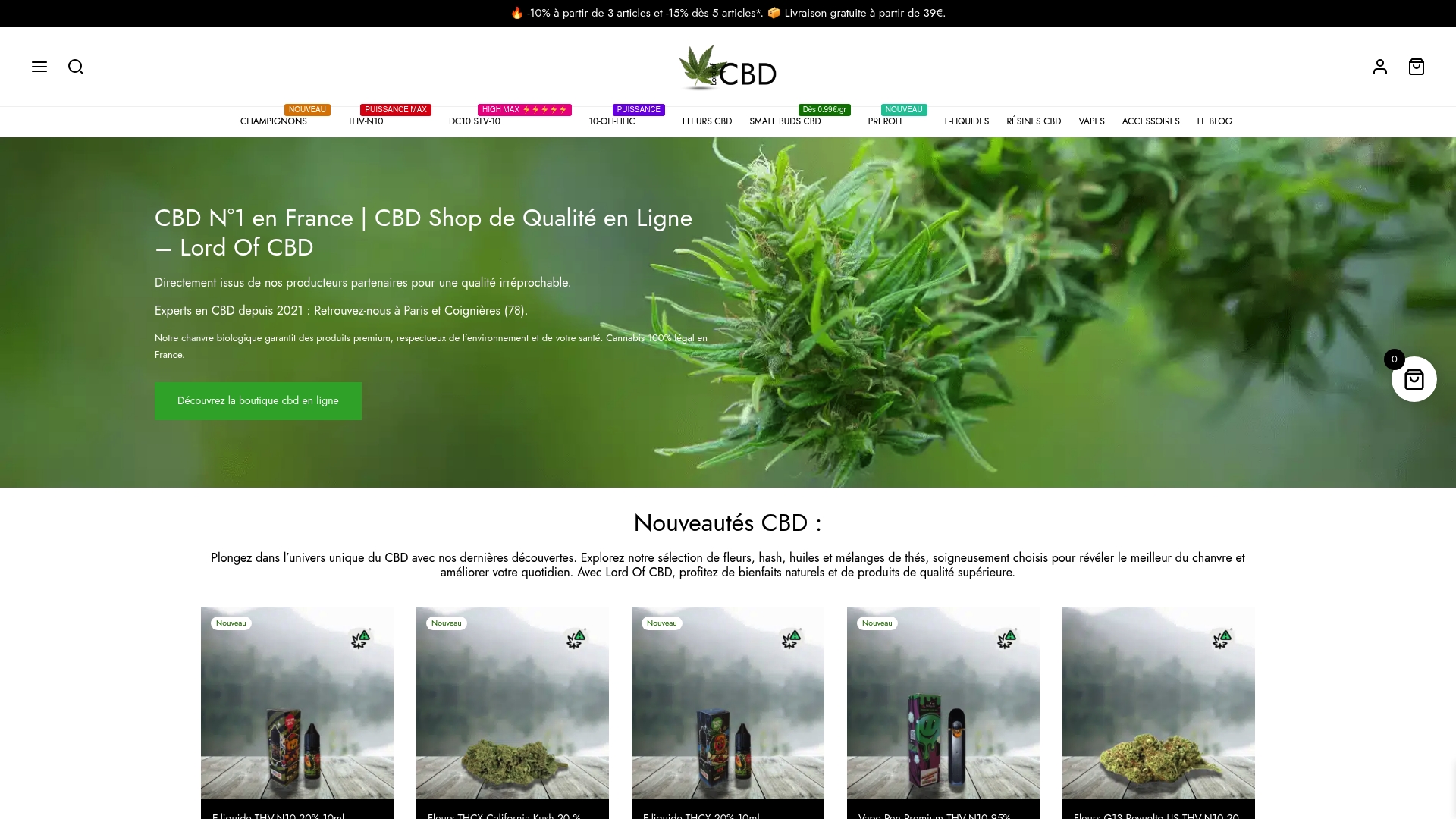
Lord Of CBD offers a selection of premium CBD products, including 10% oils ideal for gradual titration. All oils are independently lab-tested and made from certified organic hemp. The THC content remains below 0.3%, in compliance with current French regulations. Each bottle clearly indicates the concentration and quantity of CBD per drop, simplifying the calculation of your daily dose. The Lord Of CBD team is available to provide personalized advice tailored to your individual needs and the severity of your symptoms.
Frequently Asked Questions
What dose of CBD should I take for anxiety when I'm starting out?
The recommended starting dose is 10 to 15 mg per day, divided into two doses. This is increased in increments of 5 to 10 mg every 3 to 7 days depending on the effects experienced.
How long does it take to feel the effects of CBD on anxiety?
Lasting effects generally appear after 1 to 3 weeks of regular use at a stable dose. The first improvements in sleep may occur sooner.
Can CBD be taken with anxiolytic medications?
CBD may interact with certain medications metabolized by the liver enzymes CYP450. Consult a doctor before combining it with anxiolytics or antidepressants.
What is the difference between a 5% and a 10% CBD oil for anxiety?
A 5% oil contains approximately 1.5 to 2.5 mg of CBD per drop, compared to 3 to 5 mg for a 10% oil. The 10% oil is more suitable for beginners looking to reach 15 mg per day with fewer drops.
How can I tell if my CBD dosage is too high?
Signs of an overdose include daytime drowsiness, mild digestive upset, and a feeling of heaviness in the head. Reducing the dose by 5 mg is usually enough to eliminate these effects.