




For stress and sleep, Reishi remains the gold standard; for physical energy, Cordyceps; for concentration, Lion's Mane; and to support the immune system, Chaga, Shiitake, or Maitake do the trick. A proper course of treatment lasts at least four to eight weeks, and anyone taking anticoagulants, immunosuppressants, or who is pregnant should consult a doctor before starting.
In short:
- Most noticeable effects require regular intake for at least four to eight weeks, with specific timeframes depending on the species.
- It is advisable to start with a single species to properly identify its effects before attempting combinations or combined treatments.
- The quality of the extract, particularly the part used, the beta-glucan content and the extraction method, strongly influences the effectiveness of the product.
- People undergoing anticoagulant or immunosuppressive treatment, or who are pregnant, should consult a professional before starting a course of treatment.
- On average, the effect is felt in two to six weeks, depending on the objective and individual sensitivity.
Table of Contents
- Which adaptogenic mushrooms should you choose depending on your goal?
- Detailed information sheets for each species: benefits, compounds and dosage
- Which adaptogenic mushroom to choose depending on your goal: the table
- Checklist for identifying a quality extract
- How to start a treatment and monitor its effects?
- Extraction and bioavailability: what really changes efficiency
- Contraindications: In which cases should you consult a doctor before starting?
- How to test and combine several adaptogenic mushrooms?
- Why product transparency matters more than the brand
- Final recommendations from the author
- Where can I buy a reliable adaptogenic mushroom extract?
- Sources
- Frequently Asked Questions
Which adaptogenic mushrooms should you choose depending on your goal?
Six species dominate the market for adaptogenic medicinal mushrooms, and each addresses a specific need. Before embarking on a course of treatment, it's best to know which one truly suits your situation rather than buying randomly based on the promise of packaging.
- Reishi (Ganoderma lucidum) : relaxation, stress management, sleep quality. Best taken in the evening. Effects are generally noticeable after several weeks of regular use.
- Cordyceps (Cordyceps militaris/sinensis) : energy, endurance, recovery after exercise. Take in the morning or before exercise. Some feel an effect within the first few days, but the long-term effect develops over several weeks.
- Lion's Mane (Hericium erinaceus) : concentration, memory, mental clarity. Best taken during the day. Allow 2 to 4 weeks for a noticeable cognitive effect.
- Chaga (Inonotus obliquus) : general antioxidant and immune support. Flexible timing of intake. Gradual effect, noticeable over several weeks.
- Maitake (Grifola frondosa) : balances metabolism and the immune system. Often taken with meals. Onset of action similar to Chaga.
- Shiitake (Lentinula edodes) : immune support, source of various active compounds. Can be used in cooking or as an extract, with a gradual effect.
This ranking is not fixed: nothing prevents you from combining two species if your objectives overlap, but starting with just one remains the most reliable method to judge its own effect.
Detailed information sheets for each species: benefits, compounds and dosage
Each adaptogenic mushroom acts on different mechanisms, and knowing its active compounds helps to understand why some extracts work better than others.
Reishi: the mushroom of calm
Reishi is probably the species most associated with relaxation and restful sleep. Its key compounds are triterpenes (ganoderic acids) and beta-glucans, present in varying amounts depending on whether the fruiting body or the mycelium on grain is used. An open-access review on medicinal mushrooms describes interesting immunomodulatory and antioxidant effects, while emphasizing that human data remain heterogeneous depending on the protocols studied.
The recommended dosage is often around 1 to 1.5 grams of extract per day, taken once in the evening. The effects typically take between 3 and 6 weeks to appear. However, caution is advised: Reishi can have an anticoagulant effect and may interact with anticoagulation medications. Individuals taking anticoagulants, those about to undergo surgery, or pregnant women should avoid taking it without medical advice.
Cordyceps: the energy engine
Cultivated Cordyceps militaris (much more common on the market than wild Cordyceps sinensis, which has become rare and expensive) is renowned for its support of endurance and recovery. Some scientific literature suggests potential effects on exercise performance, although human trials are often small and therefore difficult to generalize. Another source of preliminary research supports this finding but does not allow for definitive conclusions.
The usual dose is between 1g and 3g of extract per day, taken in the morning or before exercise, never in the evening to avoid disrupting sleep. This is precisely one of the common pitfalls: confusing a stimulating adaptogen like Cordyceps with a sedative. Cordyceps is particularly suitable for athletes, people with mild chronic fatigue, or those looking for an energy boost without caffeine.
Lion's Mane: Mental Clarity
Lion's mane owes its reputation to its erinacines and hericenones, compounds studied for their possible link to nerve growth. Studies available on PubMed suggest an effect on cognition, but again, with limited human samples. The strength of the evidence varies considerably from one study to another, a fact confirmed by another indexed study that highlights the methodological heterogeneity within the field.
The usual dose is between 500 mg and 2 g per day, divided throughout the day to support concentration when needed. Cognitive effects are often noticeable within 2 to 4 weeks for those taking it regularly. Lion's Mane is well-suited for students, those who work at computers, or anyone seeking mental support without the jitters.
Chaga, Maitake, Shiitake: the immune trio
These three species share a common area of action: the support of the immune system, via polysaccharides and beta-glucans whose biochemistry has been studied to understand their interaction with immune cells.
Chaga herbal tea or extract, often at a dose of 1 to 2 grams per day, at a flexible time. Maitake is often associated with broader metabolic support, with a similar dose, preferably taken with meals to minimize digestive discomfort in sensitive individuals. Shiitake is easily incorporated into cooking, but using a standardized extract ensures a more reliable dose than consuming food alone.

These three species do not present any major interactions known in the current literature, but remain inadvisable, like any immunostimulating supplement, to people undergoing immunosuppressive treatment without prior medical advice.
Pro tip: Always start with only one species for at least 4 weeks before adding a second. Without this step, it's impossible to know which one is producing the effect you're experiencing, or which one to stop if discomfort arises.
Which adaptogenic mushroom to choose depending on your goal: the table
| Main objective | Recommended species | Expected timeframe for action | Time of capture | Recommended form | Key precaution |
|---|---|---|---|---|---|
| Sleep, stress | Reishi | 3 to 6 weeks | Evening | Extract or tincture | Anticoagulants, pregnancy |
| Energy, endurance | Cordyceps | A few days to several weeks | Morning, before exercise | Liquid extract or capsule | Avoid in the evening |
| Cognition, concentration | Lion's Mane | 2 to 4 weeks | Daytime | Extract or capsule | No major interactions known |
| Immunity, general balance | Chaga, Maitake, Shiitake | Several weeks | Flexible, often at mealtimes | Powder, extract or herbal tea | Immunosuppressants |
This table provides a basis for decision-making, not a prescription. If your goal combines two needs, for example, concentration AND relaxation, it's best to test a single-species treatment of each species separately before moving on to a multi-mushroom complex. Above all, remember this: the actual quality of the extract is far more important than the species name on the label. A poorly extracted Reishi is worth less than a properly standardized Lion's Mane.
Checklist for identifying a quality extract
Before buying, a few quick checks will prevent you from investing in a product with low concentration.
- Check which part is used : fruiting body or mycelium on grain. The fruiting body generally contains a higher concentration of the desired active compounds; a product that does not specify this information should be treated with caution.
- Look for the beta-glucan (or equivalent polysaccharide) content on the label or product information sheet. Even a small percentage is better than no information at all.
- Request the Certificate of Analysis (COA). A reputable supplier will make it available without you having to request it by email for three days.
- Identify the extraction method : water, alcohol, or double extraction. Since beta-glucans are trapped in chitin, a suitable extraction method makes a real difference to bioavailability.
- Check the origin and contaminant testing : heavy metals and mycotoxins, particularly for mushrooms grown on industrial substrates.
- Choose the form according to your use : capsule for precise and tasteless dosing, powder to add to a smoothie, liquid tincture for quick and adjustable intake.
Key takeaway: a product that does not display the part used, the extraction method, or access to the COA does not allow you to verify what you are actually consuming, regardless of the marketing promise on the packaging.
How to start a treatment and monitor its effects?
The basic rule: start with a low dose, for a period of 4 to 8 weeks, before judging its effectiveness. This is the time generally needed to assess the individual effect of an adaptogenic mushroom, a point on which practitioners in the field largely agree.
- Adapt the timing to the circadian rhythm: Cordyceps in the morning, Reishi in the evening, Lion's Mane during the day.
- Note down your concrete indicators in a simple notebook: sleep quality, perceived energy level, ability to concentrate.
- Plan a break of 1 to 2 weeks every 6 to 8 weeks to avoid a plateau effect.
- Avoid judging the effect after only 3 or 4 days: this is the most common mistake among beginners, who give up before the effect has had time to take hold.
Pro tip: Keep a simple three-column table (date, dose, perceived effect on a scale of 1 to 10) rather than a detailed log. Consistency is more important than accuracy.
Extraction and bioavailability: what really changes efficiency
The form of the product directly influences what your body actually absorbs. Beta-glucans are enclosed in chitin, the rigid cell wall of mushrooms, which explains why a simple raw powder of dried mushroom releases far fewer active compounds than an extract obtained using aqueous or hydroalcoholic methods.
- A 10:1 extract means that 10 kg of raw material have been concentrated to produce 1 kg of finished product, resulting in a much higher active dose by weight than a raw powder.
- Grain mycelium (often cultivated on cereals) generally contains fewer active compounds than the fruiting body, and sometimes a significant amount of starch from the culture substrate.
- To convert mentally: a raw powder often requires a dose 5 to 10 times greater than a standardized extract for a comparable effect.
- Lifestyle considerations: powder mixes easily with coffee or smoothies, liquid tincture is taken in seconds under the tongue, capsules remain the most convenient when traveling.
Contraindications: In which cases should you consult a doctor before starting?
Adaptogenic mushrooms are not without risk, even though they are sold freely as dietary supplements. Reishi, in particular, can potentiate the effects of anticoagulants and antiplatelet drugs, which warrants special caution for people undergoing treatment for blood clotting.
- Pregnancy and breastfeeding: as a precaution, avoid any treatment without prior medical validation, due to a lack of sufficient data on these populations.
- Immunosuppressive treatment: mushrooms with immune-boosting properties (Chaga, Maitake, Shiitake) can theoretically interfere with the action of the treatment.
- Kidney or liver failure: seek medical advice before any prolonged treatment.
- Warning signs to watch for: unusual digestive problems, skin reactions, dizziness. Stop taking the medication and consult a doctor if these symptoms occur.
Before starting, always tell your doctor about any supplements you are taking, including adaptogenic mushrooms, especially if you are already on long-term medication. These products support daily well-being but are not a substitute for prescribed medical treatment . The same caution applies if you are already taking other supplements such as CBD
How to test and combine several adaptogenic mushrooms?
Switching from a single treatment to a combination requires a method, not improvisation.
- Monotherapy protocol : choose one species, a low starting dose (often half the recommended dose), and stick with it for a minimum of 4 weeks before making a judgment.
- Classic combinations : Lion's Mane in the morning for concentration, Reishi in the evening for relaxation, are often associated because their circadian action windows do not overlap.
- Multi-mushroom complex vs separate extracts : a complex simplifies daily intake but makes individual dosage of each species less controllable; separate extracts offer more precision but require more rigor.
- Avoid cross-dosing : if combining, slightly reduce each individual dose to limit the accumulation of effects, especially for immune-targeting species taken together.
Why product transparency matters more than the brand
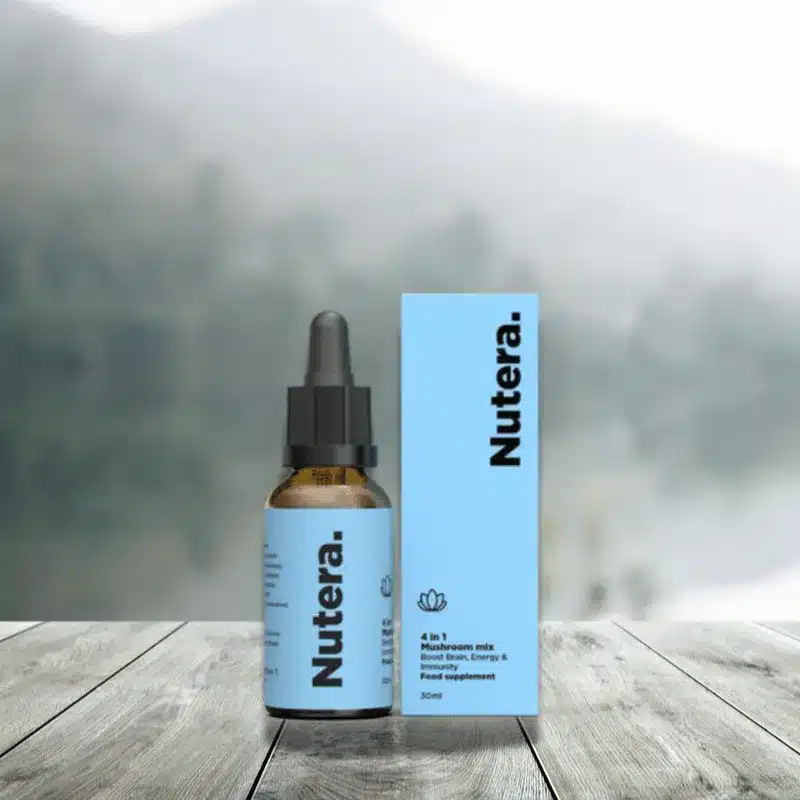
In this market, the best proof of quality isn't a logo or a catchy name; it's the availability of a certificate of analysis and a clear description of the extraction method on the product page. An extract that displays its beta-glucan content, the mushroom's origin, and the part used gives consumers a real basis for comparison. Lord Of CBD's detailed product pages illustrate this approach: before making a purchase, take the time to review the technical specifications and ask customer service any questions, especially if you're already taking a medication.
Final recommendations from the author
Three steps are all it takes to make the right choice: define your primary objective, choose the species that directly addresses it, and then test it as a single treatment, applying the quality checklist mentioned above. Don't skip this precautionary step if you are taking medication; coordinating with your doctor is less costly than an avoidable interaction. For more in-depth information on each species, the detailed fact sheets available are the best resource after reading this.
— Daniel
Where can I buy a reliable adaptogenic mushroom extract?
Once the species is chosen, the question of the supplier remains. Lord Of Cbd offers concentrated liquid extracts, such as Cordyceps 20:1 with a 50% polysaccharide content, or Lion's Mane 20:1 standardized to 40% beta-glucans, two concrete indicators that prevent blind purchases.

Each product page in the catalog indicates the extraction ratio and the concentration of active compounds—exactly the information the checklist above suggests you verify before making a purchase. If you are already taking medication or are unsure about the starting dosage, Lord Of CBD's customer service can answer your questions before you order. To compare the entire range of premium CBD and adaptogenic extracts available, go to the category page: there you will find details of the extraction ratios and methods for each product.
Sources
To further explore the strength of the scientific evidence behind these species, a few readings are worthwhile:
- Open access (PMC) article on medicinal mushrooms
- PubMed publication listed in the pool
- PubMed publication listed in the pool
- PubMed publication listed in the pool
Keep in mind the difference between a preliminary study, often conducted on a small sample or in a laboratory, and a controlled clinical trial in humans: the level of evidence is not the same, and manufacturers tend to cite both without always making the distinction.
This article provides general information and is not a substitute for professional medical advice. Consult a qualified healthcare professional about your specific situation before taking any action based on this content.
Frequently Asked Questions
What is the best brand of adaptogenic mushroom?
There is no universally superior brand: favour the one that displays an accessible certificate of analysis, a precise beta-glucan titration and an extraction method clearly indicated on the product sheet.
Which mushrooms are adaptogenic?
Reishi, Cordyceps, Lion's Mane, Chaga, Maitake and Shiitake are the six most recognized species in the category of adaptogenic medicinal mushrooms.
What is the best adaptogenic mushroom coffee?
A coffee combining Lion's Mane and Cordyceps typically provides cognitive and energy support, but always check the actual dosage of extract, which is often diluted in these ready-to-drink formats compared to a pure extract.
What are the 5 most frequently cited adaptogenic mushrooms?
The five most frequently cited species are Reishi, Cordyceps, Lion's Mane, Chaga and Maitake, with Shiitake often completing this list as a sixth common reference.
How long does it take to feel the effects of an adaptogenic mushroom?
Generally, allow between 2 and 6 weeks depending on the species and the objective, with Cordyceps sometimes acting faster on energy than Reishi on sleep.