




CBD may improve sleep, reduce anxiety, and make chronic pain more bearable for some people, but it is not a validated pain relief treatment. Clinical evidence remains limited for CBD alone, with the clearest results concerning products combining CBD and THC in a medical setting. A controlled trial with gradual titration remains the best way to determine if you are among those who respond. If you are taking multiple medications, consulting a doctor is essential.
In short:
- Scientific evidence for CBD alone for chronic pain remains limited, except in cases combining CBD and THC in a supervised medical context.
- CBD acts primarily via the endocannabinoid system and the TRPV1 receptor, with varying effects depending on the spectrum form used.
- Neuropathic pain most often benefits from combined CBD and THC treatment, while other types of pain experience little or no direct effect.
- The gradual titration method is essential to determine the optimal dose, starting low and increasing cautiously.
- Product quality is crucial: prioritize those with a certificate of analysis, compliance with the legal THC threshold, and sourced from organic hemp.
Table of Contents
- What is CBD and how does it work on chronic pain?
- What do studies on CBD and chronic pain actually show?
- Does CBD act differently depending on the type of chronic pain?
- How to dose CBD gradually without making a mistake?
- Oil, capsules, topical or inhalation: which form to choose?
- What are the side effects and drug interactions to be aware of?
- How to recognize a reliable and properly dosed CBD product?
- Why this information comes from a contributor actively involved in the topic
- What do people who have tried CBD for their chronic pain say?
- My opinion on the responsible use of CBD for pain relief
- Conduct a supervised trial using compliant and traceable products
- Sources
What is CBD and how does it work on chronic pain?
Cannabidiol, or CBD, is one of the compounds extracted from hemp that does not produce the psychoactive effect associated with cannabis. Unlike THC, it does not bind directly to the CB1 receptors in the brain responsible for the feeling of intoxication. This difference explains why CBD remains legal in France as long as the THC level of the finished product does not exceed a certain threshold 0,3 %.
Its action on pain occurs through several biological pathways that are still only partially understood. CBD interacts with the endocannabinoid system, a network of receptors found throughout the body and involved in regulating inflammation and pain sensitivity. It also acts on the TRPV1 receptor, associated with the perception of heat and pain, and modulates certain serotonergic pathways linked to mood and pain perception.
Three forms of spectrum coexist on the market, with concrete implications:
- The isolate contains only pure CBD, without any other hemp compounds.
- Broad spectrum retains several cannabinoids and terpenes but removes THC.
- Full spectrum retains all compounds, including traces of THC, which can produce what researchers call the entourage effect, a supposed synergy between hemp molecules.
This last point remains debated in the scientific literature, but it explains why some users report different results depending on the type of extract chosen.
What do studies on CBD and chronic pain actually show?
The most honest conclusion is this: the scientific evidence remains limited. The landmark systematic review, published by the Cochrane Library, found insufficient evidence to recommend cannabinoids for the management of chronic pain outside of controlled clinical trials. The few positive signals identified almost always concern combinations of THC and CBD, not CBD alone.
This is confirmed by health institutions: the officialHealth Insurance fact sheet on CBD specifies that no solid scientific evidence has yet established a certain benefit against chronic pain, while also noting that the product is not classified as a narcotic as long as it respects the regulatory threshold of THC.
The report from Geneva University Hospitals, published on Pulsations, supports this finding: CBD has documented anti-inflammatory and anxiolytic properties, and more than a quarter of users report using it specifically for painful conditions. However, the Geneva hospital is clear on one point: taken alone, CBD is often insufficient to significantly reduce pain intensity.
This discrepancy between individual experience and statistical evidence is partly explained by the methodology of the trials. Many patients experience an overall improvement in well-being, even if the pain itself does not decrease on a validated scale. The placebo effect also plays a real role in pain trials, which complicates the interpretation of individual feedback and suggests measuring improvements in quality of life and sleep, not just raw pain intensity.
Does CBD act differently depending on the type of chronic pain?
Not all chronic pain responds in the same way, and this is probably the most useful information to remember before trying CBD.
- Neuropathic pain and spasticity : this is where the signal is clearest in the literature, but almost always with products combining THC and CBD, used in a supervised medical context.
- Osteoarthritis and joint pain : preclinical studies on animals are promising, but human trials remain mixed and few in number to date.
- Fibromyalgia : CBD for fibromyalgia shows interesting results on sleep and perceived quality of life, with direct evidence on pain remaining weak.
- Lower back pain and backache : direct evidence is weak; reported improvement often comes through an indirect effect, via better sleep which reduces sensitivity to pain the next day.
This mapping explains why opinions on CBD for pain vary so much from person to person: two readers, one suffering from osteoarthritis and the other from fibromyalgia, do not statistically have the same chances of experiencing a clear effect.
How to dose CBD gradually without making a mistake?
The most reliable method for assessing whether CBD is right for you is called titration. The principle is simple: start low, increase slowly, and observe before drawing any conclusions.
- Choose a low starting dose, usually around 5 to 10 mg of CBD per dose, and stick to it for several days before making any changes.
- Increase in gradual steps, for example by 5 mg every three to seven days, keeping the same time of intake to compare objectively.
- Observe over a sufficient period : a serious trial generally requires two to four weeks before judging a dosage ineffective, as the effects on sleep and inflammation are not always immediate.
- Record each dose in a simple notebook: dose, time, intensity of pain felt on a scale of 0 to 10, quality of sleep, and any adverse effects.
- Set clear stopping criteria from the outset: beyond a certain dose without improvement, or in case of bothersome side effects, it is time to reassess with a healthcare professional rather than increasing indefinitely.
The dosage ranges reported in the literature vary enormously from person to person, depending on weight, metabolism, and individual sensitivity. It is precisely for this reason that no single figure can be presented as universal.
Pro tip: Always take your CBD at the same time every day during the titration phase, ideally in the evening if pain is disrupting your sleep. This allows you to compare similar days in your logbook, rather than mixing morning and evening doses, which may not have the same perceived effect.
Oil, capsules, topical or inhalation: which form to choose?

Format matters almost as much as dosage, because each route of administration has its own speed of action and duration of effect.
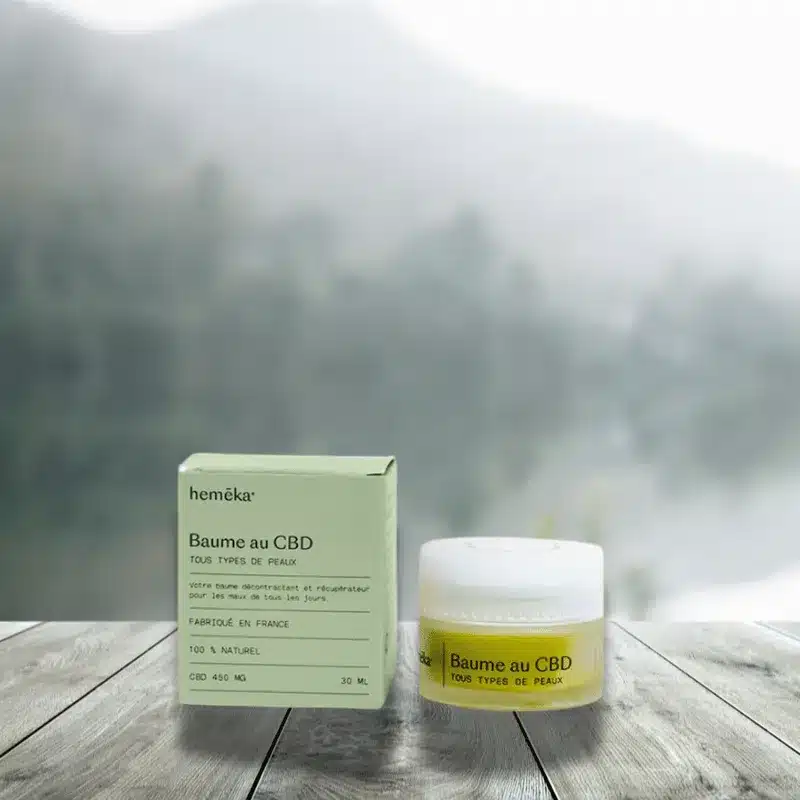
Sublingual oil is often recommended initially, as it allows for precise dosage adjustments down to half a milligram. Capsules are better suited to those who prefer a fixed routine, although they take longer to work. Topical treatments target a specific area, such as a joint, without being widely absorbed into the bloodstream, thus limiting interactions. Inhalation acts quickly but wears off just as fast, and it requires respiratory precautions that other forms do not.
What are the side effects and drug interactions to be aware of?
CBD is not without risks, although these are generally moderate compared to many conventional pain relief treatments.
The most frequently reported side effects include:
- drowsiness, sometimes marked at the beginning of treatment;
- dry mouth;
- mild digestive problems, especially in the case of high doses.
The French National Health Insurance reminds us that, in cases of increased drowsiness, driving is not recommended, just as with many sedative medications.
The most frequently overlooked point concerns drug interactions. CBD is metabolized by liver enzymes of the CYP450 group, including CYP3A4 and CYP2C19, the same enzymes that process many common medications. This means that CBD can alter the blood concentration of certain medications, either increasing or decreasing it. Classes of drugs to monitor particularly closely include anticoagulants, some anticonvulsants, and several antidepressants.
The HUG report clearly emphasizes this point: patients on multiple medications must absolutely discuss this with their doctor before starting any new treatment, including to assess whether liver function monitoring is necessary from the outset. This is not a symbolic precaution. It is a matter of practical safety when several treatments are administered simultaneously in the same body.
How to recognize a reliable and properly dosed CBD product?
The French market is full of products of very uneven quality, and the only way to find your way around is to demand verifiable proof, not marketing promises.
- Always request a Certificate of Analysis (COA) from an independent laboratory, which must confirm the actual CBD concentration stated on the label.
- Check that the THC level remains below the legal threshold of 0.3%, the only figure that guarantees the product's compliance with French regulations.
- Opt for hemp from organic farming, with tests for contaminants: pesticides, heavy metals, residual solvents.
- Choose the spectrum according to your objective : a full or broad spectrum to seek an entourage effect, an isolate if you want to avoid any trace of THC.
- Beware of labels that promise a cure or a miracle effect: no non-medical CBD product can legally claim proven therapeutic action.
This level of requirement is not excessive. It is simply what separates a compliant CBD product from one whose actual composition cannot be guaranteed.
Why this information comes from a contributor actively involved in the topic
This article was written by Daniel, an editorial contributor specializing in wellness and cannabidiol, using the most reliable scientific and institutional publications available on the subject. Lord Of CBD adheres to this same rigorous standard when selecting its product lines, with THC levels consistently below 0.3% and from verified producers. You can browse our entire catalog to see how this commitment is reflected in our products.
What do people who have tried CBD for their chronic pain say?
Beyond clinical trials, feedback shared online and in exchanges with users reveals a trend consistent with scientific data: very few people describe a disappearance of pain, but many report an improvement in well-being that changes their daily lives.
The most frequent testimonials mention less sleep interruption from nighttime pain, less pervasive muscle tension, and a better ability to manage pain peaks without necessarily a decrease in objective intensity. This distinction is important: it corresponds exactly to what independent analyses suggest regarding the link between CBD and sleep quality, where improvement in chronic pain often seems to come from better quality sleep rather than direct pain relief.
Other feedback is more mixed, particularly from people expecting an effect comparable to a conventional painkiller. This contrast between expectations and results explains some of the negative reviews sometimes found online: CBD does not replace approved medical treatment; rather, it is a complementary approach, combining medical supervision, lifestyle adjustments, and sometimes other treatments. Those who report the best results are generally those who have used a methodical titration process rather than improvising a single dose.
My opinion on the responsible use of CBD for pain relief
My conviction, after reviewing this data, is that CBD deserves to be tried methodically rather than with unrealistic expectations. Titration is not a mere formality: it's what separates a trial that teaches you something about your body from one failed due to impatience. If you are undergoing treatment for another condition, consulting your doctor is essential, not out of an abundance of caution, but because liver interactions are real. A well-conducted four-week trial, with an honest monitoring log, will give you a more reliable answer than any opinion read online.
— Daniel
Conduct a supervised trial using compliant and traceable products
Trying CBD requires starting with reliable information, not testing a product whose composition cannot be guaranteed. Each product complies with the legal limit of 0.3% THC and comes from organic hemp producers selected for their traceable quality controls.

For a titration phase, sublingual oil remains the simplest format to adjust to the nearest half-milligram, while a targeted topical application is better suited to localized pain, such as in a joint. If you are unsure which format to choose or would like advice tailored to your specific situation, you can select the concentration and format that best suit your needs. Discover our selection of CBD boxes designed for first-time users or contact our team for personalized support before ordering.
Sources
- Ameli
- Indications, efficacy and risks: an overview of CBD | Pulsations
- Cannabinoids for managing chronic pain | Cochrane Library