



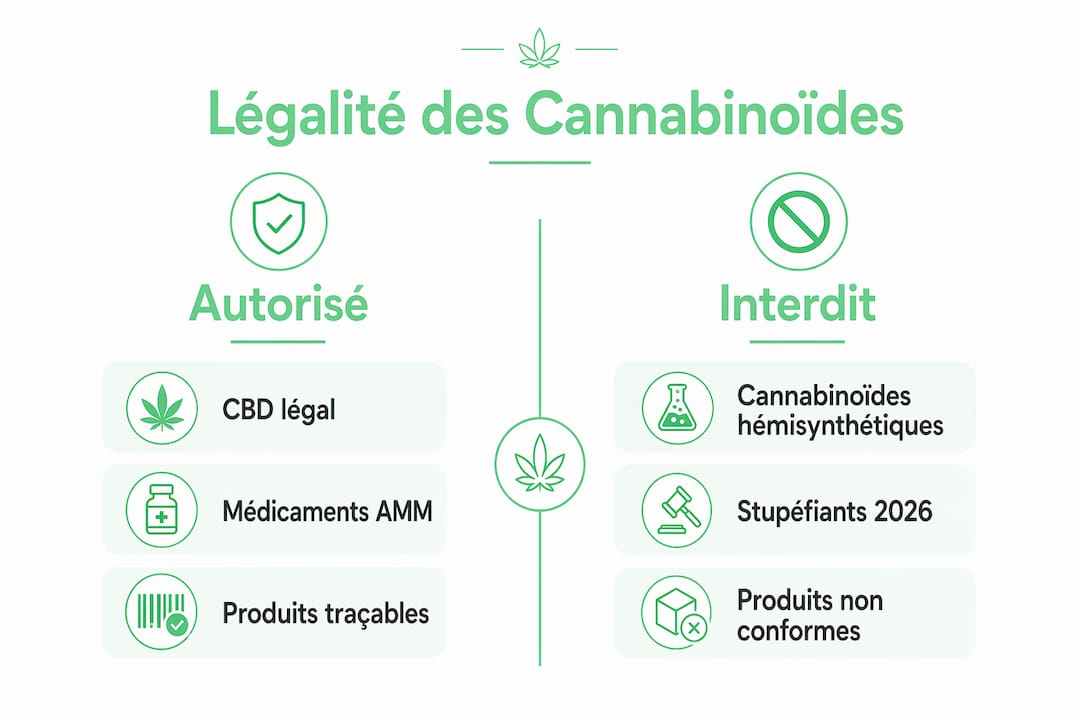
In France, CBD is not classified as a narcotic, while several semi-synthetic and chemically modified cannabinoids were added to the list of narcotics by theANSM (French National Agency for Medicines and Health Products Safety) in June 2024, with an immediate ban on their production, sale, and use. Δ9-THC also remains classified as a narcotic above 0.3% in finished products. If you're looking for a quick answer before reading further, here's the gist:
- Pure CBD : not classified as a narcotic, marketable under strict conditions (THC < 0.3%, traceability, no unauthorized therapeutic claims).
- Δ9-THC : narcotic when the content exceeds 0.3% in the finished product.
- HHC, THCP, H4-CBD, H2-CBD, HHCO, HHCP, HHCPO, THCA : listed as narcotics since June 3, 2024, prohibited for sale and consumption.
- Epidyolex : the only CBD-based medicine with marketing authorization (MA) in France, dispensed only on prescription.
- Immediate actions : demand a certificate of analysis (COA) from a third-party laboratory, verify that the Δ9-THC level is less than 0.3%, consult ANSM press releases and drug.gouv.fr fact sheets before any purchase.
Table of Contents
- What is the legal status of common cannabinoids in France?
- Why did the ANSM classify new cannabinoids as narcotics in 2026?
- What is allowed or prohibited for CBD in France?
- Which cannabinoid-based medications are authorized in France?
- What are the health risks and what should be done in case of poisoning?
- How to stay within the law and buy safer products?
- Which products and cannabinoid families should be absolutely avoided?
- Key points
- What most cannabinoid guides don't tell you
- Lord Of CBD: traceable, compliant, and lab-tested CBD products
- Official sources to verify the legality of cannabinoids in France
What is the legal status of common cannabinoids in France?
The table below summarizes the regulatory situation for the most frequently encountered molecules on the French market. The decisive criterion is not solely the percentage of THC: a molecule can be prohibited, even if it is of plant origin, if it has been chemically modified or belongs to a class targeted by the ANSM (French National Agency for Medicines and Health Products Safety).
| Cannabinoid | Status in France (2024) | Practical commentary | Main source |
|---|---|---|---|
| CBD (cannabidiol) | Allowed under certain conditions | THC < 0.3% in the finished product; no therapeutic claims without marketing authorization | MILDECA / Ameli |
| Δ9-THC | Prohibited (narcotic) above 0.3% | 0.3% threshold for extracts compliant according to decree | MILDECA |
| — | Prohibited (narcotic) | Listed as a narcotic | ANSM |
| HHC | Banned since June 2024 | Classified as a narcotic by ANSM decision of June 3, 2024 | ANSM |
| THCP | Banned since June 2024 | Effects reported to be more intense than natural Δ9-THC | ANSM |
| THCA | Banned since June 2024 | A precursor to THC, now classified as a narcotic | ANSM |
| H4-CBD | Banned since June 2024 | Semi-synthetic, benzo[c]chromene nucleus | ANSM |
| H2-CBD | Banned since June 2024 | Semisynthetic, same family as H4-CBD | ANSM |
| HHCO / HHCP / HHCPO | Banned since June 2024 | HHC derivatives are classified as narcotics | ANSM |
| CBN (cannabinol) | Status not published — caution advised | Not explicitly classified, but monitoring is underway | ANSM / MILDECA |
| CBG (cannabigerol) | Not classified as a narcotic to date | Present in some legal hemp extracts | MILDECA |
| THCV | Not classified as a narcotic to date | Limited data; monitor ANSM updates | ANSM |
Why did the ANSM classify new cannabinoids as narcotics in 2026?
The decision came into force on June 3, 2024.It mainly targets two categories of molecules: semi-synthetic cannabinoids derived from the benzo[c]chromene nucleus (H4-CBD, H2-CBD) and derivatives of HHC and THC obtained by chemical modification (HHCO, HHCP, HHCPO, THCP, THCA).
The reasons officially given by the ANSM are clear:
- Serious reports from CEIP-A : the centers for evaluation and information on drug dependence-addictovigilance have reported cases of vomiting, convulsions, coma and psychiatric disorders associated with these substances.
- Addiction potential : some derivatives have a higher affinity for cannabinoid receptors than natural Δ9-THC, which amplifies psychoactive effects and the risk of problematic use.
- Lack of safety data : no serious clinical evaluation exists for these molecules, unlike CBD, whose profile is documented.
- Regulatory circumvention : these substances were marketed as legal substitutes for cannabis, exploiting a legal loophole that the decision closes.
In practical terms, since June 3, 2024, producing, selling, possessing, or consuming these substances is a criminal offense under narcotics law. Retailers who have not removed these products from their shelves face immediate penalties.
What is allowed or prohibited for CBD in France?
CBD enjoys a distinct status from THC: it is not classified as a narcotic and has no recognized addictive potential. But "legal" does not mean "without rules." Here's what that means in practice.
What is allowed:
- Cosmetics containing pure CBD, provided that the THC content of the finished product remains below 0.3%.
- Vaping liquids containing CBD, subject to compliance with European declaration obligations (REACH regulation) and respect for the 0.3% THC threshold.
- Hemp extracts intended for industrial or cosmetic uses, produced by approved farmers from authorized varieties.
What is prohibited:
- The sale of raw flowers and leaves to consumers, regardless of form (for smoking, as an infusion, loose), is prohibited. While the Council of State has overturned the general ban, direct retail sales remain regulated, and raw flowers for smoking remain in a legal gray area.
- Food products containing CBD without prior EFSA assessment: CBD is subject to the Novel Food regime in Europe, which requires authorization before any food product can be placed on the market.
- Any finished product exceeding 0.3% THC is automatically classified as a narcotic.
- Therapeutic claims on products without marketing authorization.
An often overlooked point: traces of THC present in some CBD products can be detected in blood or saliva. A driving under the influence of drugs is still possible even with a legal product.
Pro tip: To read a Certificate of Analysis (COA) correctly, check that the report specifies the analytical form (free Δ9-THC, not just total equivalents), the laboratory's limit of quantification, and that the analysis was performed by an accredited third-party laboratory. A COA without this information offers no protection to either the consumer or the seller in the event of an inspection.

Which cannabinoid-based medications are authorized in France?
The medical circuit and the consumer market are two separate worlds. Only one CBD-based medication has marketing authorization in France: Epidyolex®, indicated for certain forms of severe epilepsy in patients aged 2 and over. It is dispensed only with a medical prescription, under the supervision of a neurologist, and has nothing to do with CBD products sold in stores.

Furthermore, France has conducted an experiment with medical cannabis, the regulated procedures of which explicitly exclude smoking. The forms authorized within this framework are standardized preparations administered under strict medical supervision.
A few key points to remember:
- Self-medication with non-medical CBD : INRSrecommends not exceeding 50 mg of CBD per day without medical advice, with a gradual increase in 10 mg increments every two days.
- Drug interactions : CBD may interact with clobazam, valproate, and other antiepileptic drugs. Any concurrent use with other medical treatment requires prior consultation.
- Verification of the MA : the public database of medicines (base-donnees-publique.medicaments.gouv.fr) allows you to check if a product has an official authorization.
What are the health risks and what should be done in case of poisoning?
Legal cannabinoids like CBD generally have an acceptable tolerability profile, but semi-synthetic and synthetic derivatives are another matter. Reports from CEIP-A document serious effects from substances now classified as narcotics.
Adverse effects reported according to the substances:
- CBD (high doses): drowsiness, diarrhea, elevated liver enzymes, drug interactions.
- Δ9-THC and derivatives: anxiety, paranoia, tachycardia, short-term memory impairment.
- HHC, THCP, and semi-synthetic derivatives: vomiting, seizures, loss of consciousness, kidney failure, severe psychiatric disorders. These effects are often more intense than those of natural THC due to a greater affinity for CB1 receptors.
The difference in intensity between natural and semi-synthetic cannabinoids is not insignificant. Some derivatives, such as THCP, bind to cannabinoid receptors with a much higher affinity than Δ9-THC, making the effective dose unpredictable and the risk of overdose real.
What to do in practical terms:
- Call 15 (SAMU) or 112 in case of serious symptoms (seizures, loss of consciousness, respiratory distress).
- Contact poison control center for less urgent poisoning.
- Retain the packaging, COA and any information about the product consumed to facilitate identification by caregivers.
- Report the product via signalement.social-sante.gouv.fr to contribute to national monitoring.
To delve deeper into the interactions and toxicological profile of CBD, Lord Of Cbd's CBD safety and toxicological profile guide details the mechanisms and precautions to take.
How to stay within the law and buy safer products?
Here is an operational checklist, valid for both consumers and merchants.
For consumers:
- Require a full COA : the report must mention the free Δ9-THC (not just total equivalents), the limit of quantification and the name of the accredited third-party laboratory.
- Check that the Δ9-THC content is less than 0.3% in the finished product, not just in the raw material.
- Avoid any product sold as "powerful THC analogue", "guaranteed effect", or whose composition is vague or absent from the label.
- Consult a doctor before using CBD if you are currently taking medication, especially anticoagulants, antiepileptics or immunosuppressants.
- Purchase only from vendors who publish their Certificates of Analysis (COA) and indicate the origin of the hemp (variety, country of cultivation, organic certification if available). The guide on how to choose a quality CBD oil details the essential criteria.
For retailers:
- Immediately remove any product containing HHC, THCP, H4-CBD, H2-CBD, HHCO, HHCP or HHCPO.
- Making no therapeutic claims about a product without marketing authorization is a separate offense, independent of narcotic status.
- Keep the COAs for each batch and make them accessible in case of inspection.
- Monitor updates from ANSM and drogues.gouv.fr: the list of narcotics can change rapidly.
Pro tip: To estimate your CBD dose in milligrams, multiply the CBD percentage indicated on the bottle by the total volume in milliliters, then divide by 100. A 10% oil in a 10 ml bottle contains 1,000 mg of CBD in total, or approximately 33 mg per standard 0.33 ml dropper. Start low, increase slowly.
Which products and cannabinoid families should be absolutely avoided?
Certain warning signs on packaging should trigger an immediate alert. Legal classification is based on the chemical identity of the molecule, not on its plant origin or trade name.
Families at risk:
- All HHC derivatives: HHC, HHCO, HHCP, HHCPO, classified as narcotics since June 2024.
- The semi-synthetic cannabinoids of the benzo[c]chromene nucleus: H4-CBD, H2-CBD.
- THCP and THCA, now listed as narcotics.
- Purely synthetic cannabinoids (JWH-018 and analogues): long prohibited, but sometimes found in mislabeled products.
Warning signs on the packaging:
- Total absence of COA or COA undated and without laboratory name.
- Mentions such as "ultra-powerful", "guaranteed effect", "10x stronger than THC".
- Cannabinoid concentration not specified in mg or percentage.
- Labeling in a foreign language only, without French translation of ingredients.
- Selling on platforms without a physical address or reachable customer service.
E-liquids, flowers, and resins without traceability pose an additional problem: the actual concentration of active cannabinoids can vary considerably from batch to batch, making reliable dosing impossible. For flowers in particular, Lord Of CBD's guide on how to choose CBD flower explains which labeling criteria to check before purchasing.
Key points
In France, CBD remains legal under strict conditions while semi-synthetic cannabinoids such as HHC, THCP and H4-CBD have been classified as narcotics since June 3, 2024, with a total ban on production, sale and use.
| Point | Details |
|---|---|
| CBD is non-psychotic | CBD is not classified as a narcotic, but the finished product must contain less than 0.3% of Δ9-THC. |
| ANSM ranking June 2024 | HHC, THCP, H4-CBD, H2-CBD, HHCO, HHCP, HHCPO and THCA have been banned since June 3, 2024. |
| Epidyolex under Marketing Authorization | The only CBD medication authorized in France, dispensed by prescription for certain types of epilepsy. |
| COA required | Require a third-party laboratory analysis certificate specifying the free Δ9-THC before any purchase. |
| Lord Of CBD | Offers traceable CBD products with THC < 0.3%, derived from selected organic hemp, with COAs available. |
What most cannabinoid guides don't tell you
The legality of cannabinoids is often presented as a simple slider between "legal CBD" and "prohibited THC." This is a dangerous oversimplification. What the ANSM decision of June 2024 reveals is that the determining criterion is not the plant origin of a molecule, nor even its THC percentage, but its precise chemical identity and its inclusion on an administrative list that can change in a matter of weeks.
The market has reacted to each new regulation by producing "legal analogues": when THC was regulated, HHC appeared; when HHC was banned, other derivatives followed. This cat-and-mouse game puts the consumer in an uncomfortable position: a product legally purchased one month can become a narcotic the next. The only real protection is to stick to molecules with a stable and documented status, such as CBD, and to buy from vendors who publish their Certificates of Analysis (COAs) and update their catalogs in real time.
The other blind spot: many consumers think that "natural" means "safe" and "legal." THCA is plant-derived. It is now classified as a narcotic. H4-CBD sounds similar to CBD in name, but its altered chemical structure places it in a radically different category. Reading the label isn't enough if you don't know what the names mean chemically.
Lord Of CBD: traceable, compliant, and lab-tested CBD products
When regulations change so quickly, traceability isn't a marketing ploy, it's a concrete guarantee. Lord Of Cbd selects its suppliers based on strict criteria: certified organic hemp, a Δ9-THC level of less than 0.3% in each finished product, and analyses carried out by independent third-party laboratories whose Certificates of Analysis (COAs) are accessible.
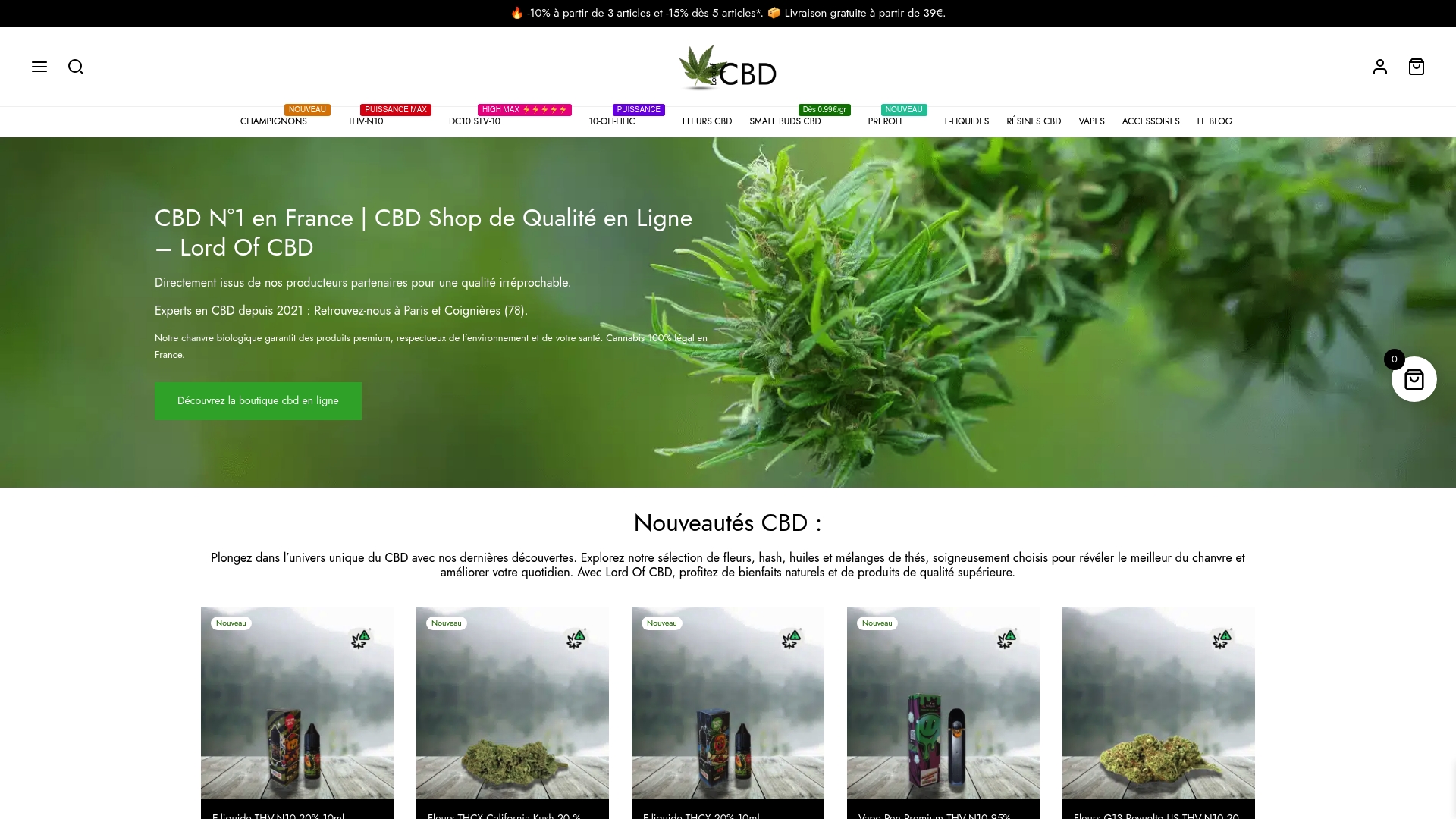
Resins, flowers, oils: every item in the catalog comes with its compliance documentation. No unauthorized therapeutic claims, no narcotics, no ambiguity about the composition. For consumers who want to buy with complete peace of mind, premium CBD includes the most sought-after products, delivered free of charge in France. Check the product sheets and their Certificates of Analysis (COAs) directly on the website.
Official sources to verify the legality of cannabinoids in France
Here are the references to consult to stay up-to-date on the regulations:
- ANSM (ansm.sante.fr): classification announcements, official list of narcotics, health alerts. Consult this first for any questions about the status of a substance.
- MILDECA / drogues.gouv.fr (drogues.gouv.fr/le-cbd): fact sheets on CBD, regulatory framework for products, guide for consumers and professionals.
- Ameli.fr (ameli.fr): precautions for using non-medical CBD, drug interactions, information on Epidyolex.
- Council of State (conseil-etat.fr): case law decisions on the marketing of hemp flowers and leaves.
- Légifrance (legifrance.gouv.fr): official regulatory texts, classification orders, Public Health Code.
- Public database of medicines (base-donnees-publique.medicaments.gouv.fr): verification of MAs, including that of Epidyolex.
- Health reporting (signalement.social-sante.gouv.fr): platform to report a suspicious product or an adverse effect.
- INRS (inrs.fr): state of knowledge on CBD, dosage recommendations and interactions.
To verify the status of a specific product, the most reliable method is to search for the name of the molecule in the decrees published on Légifrance and cross-reference this with recent press releases from the ANSM (French National Agency for Medicines and Health Products Safety). The list of narcotics is a living regulatory text: a molecule absent today may be on it in three months.
This article provides general information and does not constitute legal or medical advice. For your specific situation, consult a healthcare professional or a specialized lawyer and verify the applicable official regulations.