




CBD is effective against canine anxiety because it acts directly on the dog's endocannabinoid system, a biological network that regulates stress, emotions, and behavior. This cannabidiol, extracted from hemp and without psychoactive effects, is currently one of the most studied natural approaches to calming anxious dogs. Understanding why CBD is effective for canine anxiety is a legitimate question that rests on three pillars: biology, available clinical evidence, and best practices for administration. This article provides concrete answers, including scientific and regulatory updates as of 2026.
How does CBD affect the endocannabinoid system in dogs?
The endocannabinoid system is a network of receptors found throughout a dog's body, particularly in the brain, nervous system, and immune organs. This network naturally regulates mood, stress response, and emotional behavior. When a dog is anxious, this system is often imbalanced.
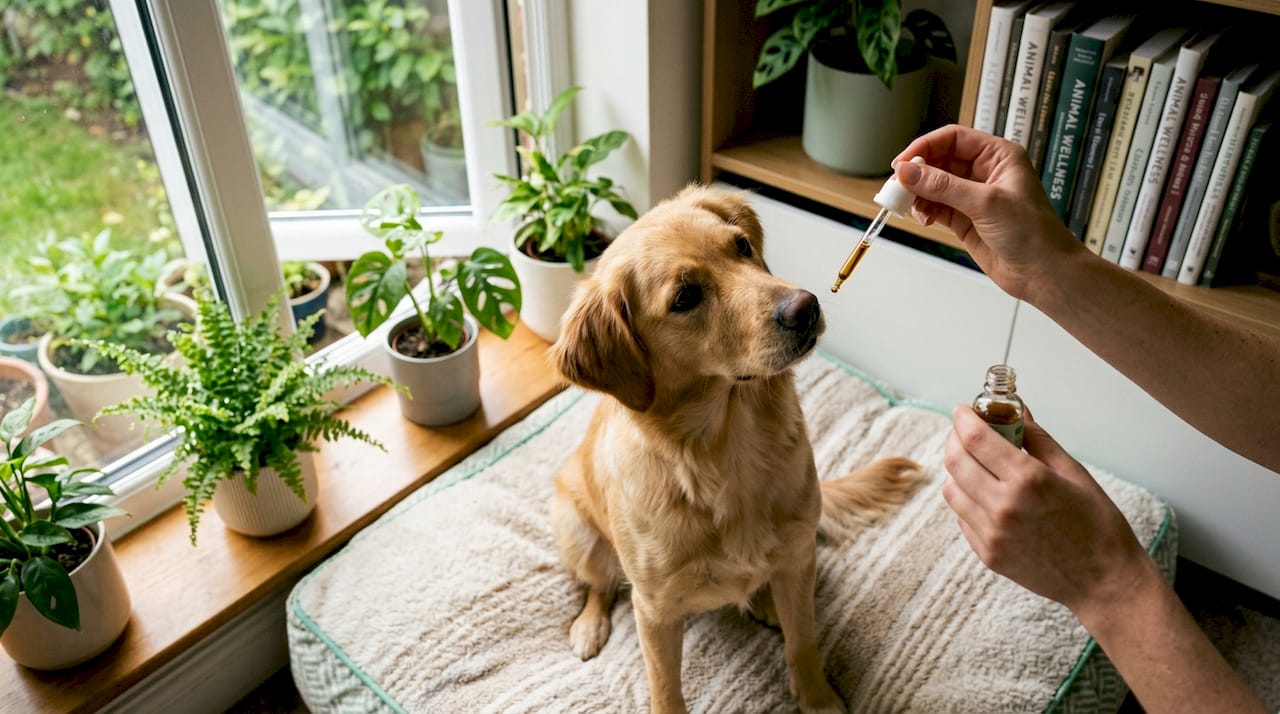
CBD modulates the stress response by interacting with two main types of receptors: CB1 receptors, concentrated in the brain and central nervous system, and CB2 receptors, present in immune tissues. CB1 receptors play a direct role in regulating emotions and fear. This is precisely where CBD exerts its most significant influence on anxious behavior.
Unlike THC, CBD does not bind directly to these receptors. It modulates them indirectly, which explains the absence of a psychoactive effect. The result is a gentler regulation of stress, without altering the animal's consciousness.
- CB1 receptors : present in high density in the cerebellum and prefrontal cortex of the dog, areas linked to fear and decision-making.
- CB2 receptors : involved in the inflammatory response and the immune system, which also react to chronic stress.
- Indirect modulation : CBD acts on other pathways such as serotonin (5-HT1A) receptors, contributing to a calming effect.
CBD is more effective at modulating stress-related behaviors than at treating the root cause of anxiety. This means it alleviates visible symptoms, such as restlessness, excessive barking, or destructive behaviors, without resolving underlying trauma.
Pro tip: Observe your dog for the first 48 hours after introducing CBD. Note any specific behavioral changes: barking frequency, posture, appetite. This data will help your veterinarian adjust the protocol.
What clinical evidence supports the effectiveness of CBD against anxiety?
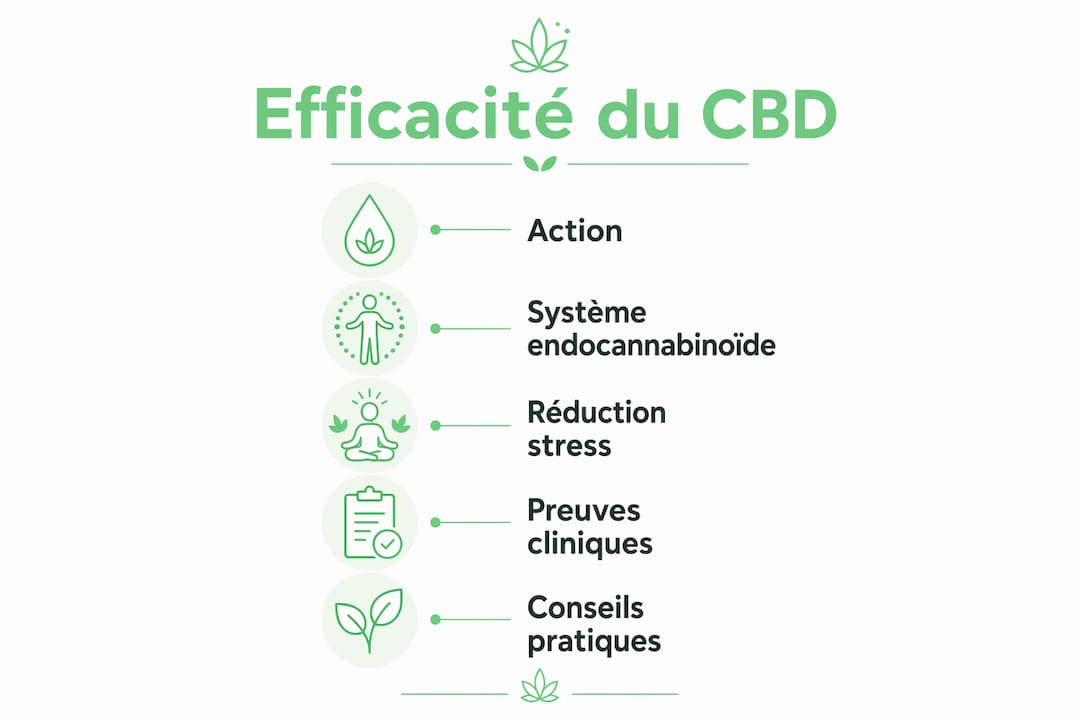
Scientific data on CBD for stress in dogs is progressing, but remains limited. A controlled clinical study from 2026 currently constitutes the most robust reference available on the subject.
| Evaluated criterion | Observed result |
|---|---|
| Owners' perception | Significant improvement in anxious behaviors |
| Objective behavioral measures | No clear and measurable change |
| C-BARQ Subscales | Improvement in aggression, fear, and separation anxiety |
| Reported side effects | Minors and transients |
This study shows an improvement in the C-BARQ subscales related to aggression, fear, and separation anxiety in the treated dogs. This is an encouraging result. However, objective behavioral measures, such as standardized laboratory tests, did not confirm these improvements in a statistically significant way.
“Evaluating the effectiveness of CBD requires precise indicators combining behavioral assessment, stress context, and administration timing; otherwise, the effect may appear absent.” Source: Clinical expertise 2026
This distinction is crucial. Homeowners perceive a real improvement, but current measurement tools are not yet precise enough to quantify it objectively. This does not mean that CBD is ineffective. It means that research needs to refine its methods.
Other studies focus on acute stress, such as reactions to thunderstorms or fireworks, and on fear-related aggressive behaviors. The results are consistent with the 2026 study: a perceived improvement, sometimes reduced physiological markers like cortisol, but still insufficient evidence for official medical recommendations. To further explore what research says about CBD for dogs, the available data remains promising.
What are some practical tips for using CBD with an anxious dog?
The effectiveness of CBD in calming a dog depends as much on the product chosen as on how it is administered. Here are the essential points to keep in mind.
- Choosing the right form : Sublingual CBD oil remains the most widely used form because it allows for precise dosing. CBD-enriched treats and kibble offer simpler administration but less controllable dosage.
- Respect the timing : administer CBD 1 to 2 hours before a predictable stressful situation, such as a trip, a visit to the vet, or an approaching thunderstorm. For chronic anxiety, regular daily administration is preferable.
- Adjust the dosage according to the dog's weight : practical guides generally recommend starting with a low dose and gradually increasing it based on the dog's response. There is no universal dosage: weight, age, and the type of anxiety influence the effective dose.
- Check the product's quality : choose a THC-free CBD product with a documented certificate of analysis (COA) issued by an independent laboratory. Product traceability is essential to guarantee the animal's safety.
- Consult a veterinarian : before any use, veterinary advice helps to rule out medical causes of anxiety and to avoid interactions with other treatments.
Pro tip: For separation anxiety, start with low doses administered every morning for two weeks. Keep a daily behavior log. This structured approach provides concrete data for your veterinarian.
To choose a quality product, a guide on CBD oils can help you identify the essential criteria: concentration, extraction, traceability.
What are the risks and limitations of CBD for canine anxiety?
CBD is generally well tolerated by dogs, but several risks deserve serious attention.
Dogs are hypersensitive to THC, the psychoactive molecule in cannabis. Their cerebellum contains a high density of CB1 receptors, making THC poisoning particularly serious, even at low doses. Therefore, only products with documented THC-free content should be used.
- Risk of THC contamination : a poorly controlled product may contain traces of THC sufficient to intoxicate a dog.
- Unsupervised self-medication : without veterinary advice, it is impossible to rule out a medical cause for anxiety or a drug interaction.
- Lack of veterinary marketing authorization : the ANMV reminds us that no veterinary CBD-based medicine has marketing authorization in France in 2026.
- Regulatory ban in animal feed : Animal feed containing CBD is not permitted in the European Union according to EC regulation 1831/2003.
The strict regulatory framework also prohibits any therapeutic claims on CBD products for animals. Any product presented as a medical treatment is automatically reclassified as a veterinary medicine, subject to very strict legal constraints. To understand the implications of CBD legislation in France, this framework also applies to products intended for animals.
The toxic risk associated with THC necessitates choosing only documented and traceable THC-free products. This is an aspect too often overlooked by owners who purchase CBD products without verifying the certificates of analysis.
CBD vs other natural solutions: what's the difference when it comes to calming your dog?
Several natural approaches exist for managing canine anxiety. CBD stands out due to its specific mechanism of action.
| Solution | Mechanism of action | Speed | Stress targeting |
|---|---|---|---|
| CBD | Endocannabinoid system (CB1, CB2, serotonin) | Moderate (1–2 h) | Specific and documented |
| Herbal medicine (valerian, passionflower) | Central nervous system, GABAergic pathways | Variable | General |
| Aromatherapy (lavender) | Olfaction, limbic system | Fast | Superficial |
| Nutritional supplements (L-tryptophan) | Serotonin precursor | Slow (weeks) | Indirect |
CBD stands out from other natural stress relievers due to its direct action on the receptors of the endocannabinoid system, a network that other plants do not activate. This unique characteristic explains why some dogs respond better to CBD than to valerian or passionflower.
Lavender aromatherapy can reduce surface agitation, but its effect is limited to situations of mild stress. L-tryptophan supplements affect serotonin production, but their effects take weeks to appear. CBD offers an interesting compromise: relatively rapid action and more precise neurological targeting.
The best approach often combines several methods. CBD can complement behavioral work conducted by a veterinary behaviorist, particularly for separation anxiety or phobias of loud noises. When exploring CBD as an alternative to conventional anxiolytics , differences in action profiles are crucial.
Key points
CBD reduces canine anxiety by modulating the endocannabinoid system, but its maximum effectiveness relies on a THC-free product, appropriate dosage, and veterinary supervision.
| Point | Details |
|---|---|
| Biological mechanism | CBD acts on CB1 and CB2 receptors to regulate stress without psychoactive effects. |
| Clinical evidence available | The C-BARQ 2026 study shows an improvement perceived by owners, without total objective confirmation. |
| Administration timing | Administer 1 to 2 hours before a stressful situation for acute anxiety. |
| Security and traceability | Choose only products with a certificate of analysis confirming the absence of THC. |
| Regulatory framework | No veterinary marketing authorization for CBD in France in 2026; therapeutic claims are prohibited. |
What I've learned from following the evolution of CBD for anxious dogs
Since dog owners have become seriously interested in CBD, I've observed a trend that both concerns and encourages me. The demand is real, the testimonials are numerous, and the perceived results are often positive. But many owners skip the veterinary consultation, convinced that "natural" means "risk-free.".
What the 2026 study confirmed for me is that owner perception is a valid indicator, but insufficient on its own. A dog that seems less agitated is not necessarily a dog cured of its anxiety. The underlying cause, whether it be trauma, chronic pain, or a structured behavioral disorder, requires a veterinary diagnosis.
What also strikes me is the persistent confusion surrounding THC. Owners buy cheap CBD products without checking the certificates of analysis. They are unaware that their dog is far more vulnerable to THC than they are. A poorly controlled product can turn a treatment attempt into a veterinary emergency.
My most direct advice: treat CBD as a serious supplement, not a miracle cure. Choose traceable products, consult your veterinarian before starting, and combine CBD with behavioral therapy if the anxiety is severe. This combination yields the best lasting results.
— Daniel
Lordofcbd products to support your anxious dog
Lordofcbd offers a selection of CBD products made from organic hemp, with a THC content of less than 0.3% and complete traceability for each product. Each product comes with a certificate of analysis from an independent laboratory, directly meeting animal safety requirements.
For owners who wish to explore this option for their dog, Lordofcbd's CBD for dogs page details the available forms, usage tips, and precautions. Lordofcbd always recommends a veterinary consultation before introducing CBD into an animal's routine. Product quality and professional guidance are essential for responsible use.
Frequently Asked Questions
Why is CBD effective against anxiety in dogs?
CBD acts on the dog's endocannabinoid system by modulating CB1 and CB2 receptors, which regulate stress and emotions. This specific biological action reduces anxious behaviors without producing any psychoactive effects.
When is the best time to give CBD to an anxious dog?
Administer CBD 1 to 2 hours before a predictable stressful situation, such as a thunderstorm or travel. For chronic anxiety or separation anxiety, regular daily administration is more appropriate.
Is CBD legal for dogs in France in 2026?
No CBD-based veterinary medicinal product has marketing authorization in France in 2026. CBD products for animals can be marketed as supplements, but without therapeutic claims, in accordance with the European regulatory framework.
How to choose a safe CBD product for your dog?
Choose a product with a Certificate of Analysis (COA) issued by an independent laboratory, confirming the absence of THC. The traceability of the hemp source and the CBD concentration must be clearly indicated on the label.
Does CBD replace veterinary treatment for canine anxiety?
No. CBD is a natural supplement, not a substitute for a veterinary diagnosis. For severe or persistent anxiety, a veterinary behaviorist should be consulted to identify the cause and propose an appropriate treatment plan.